
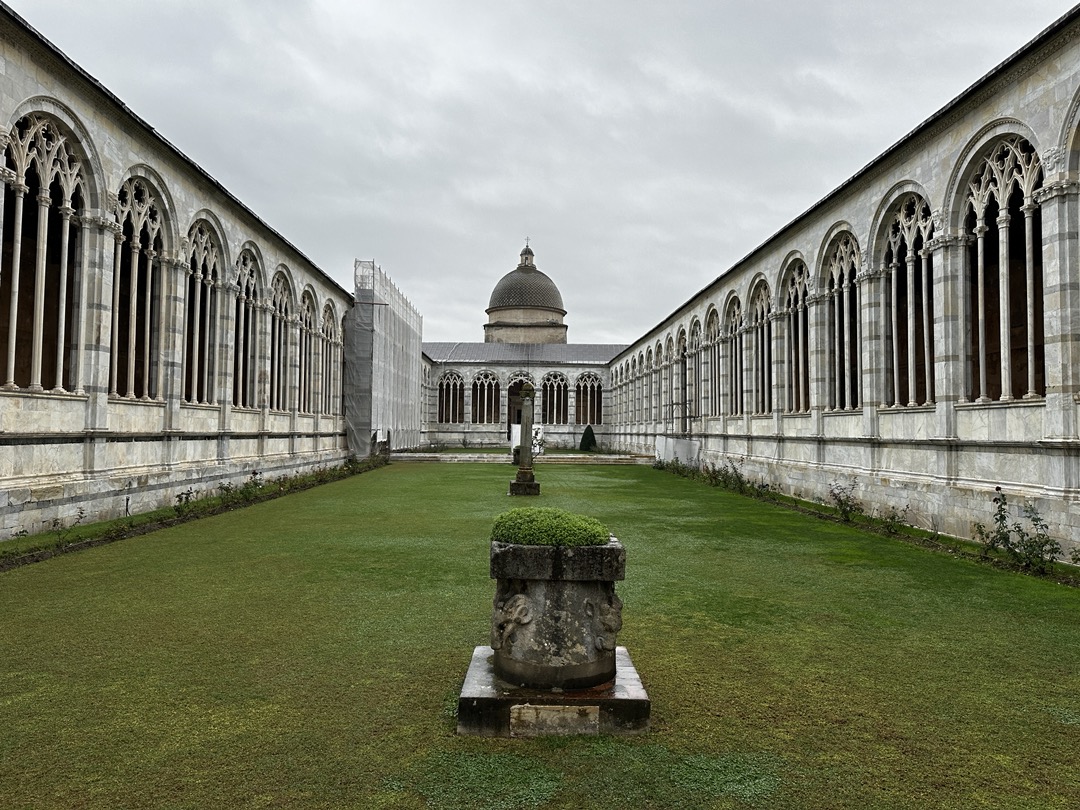
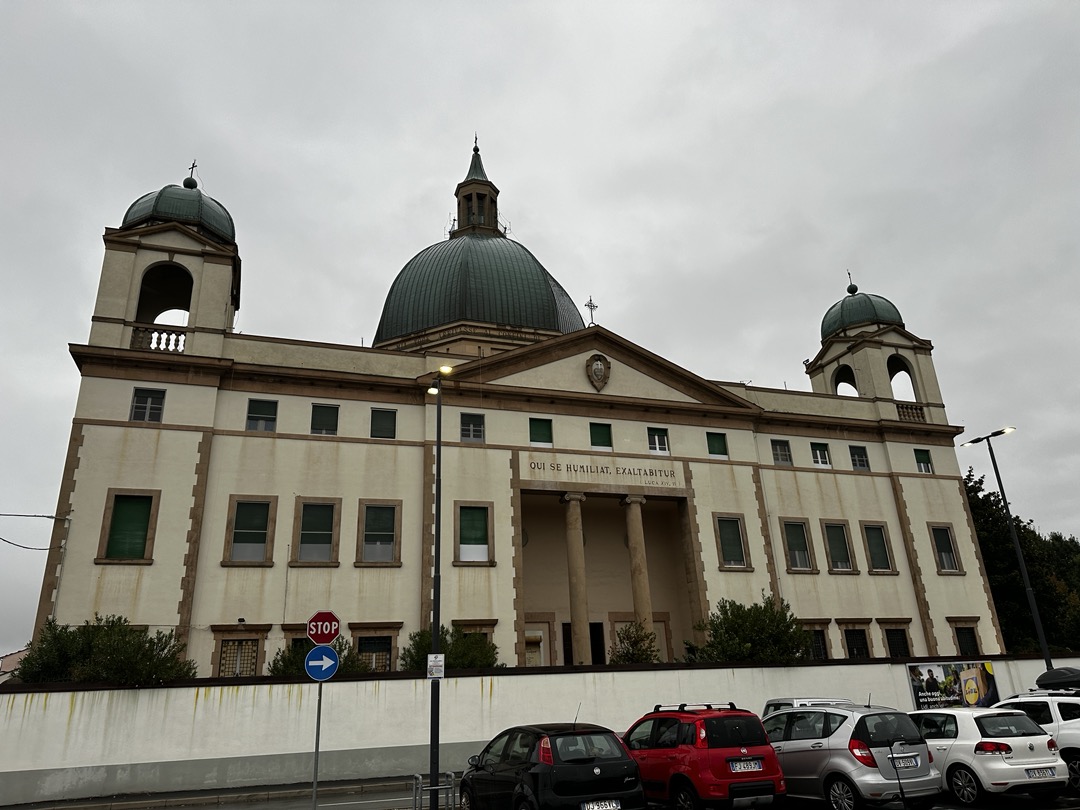
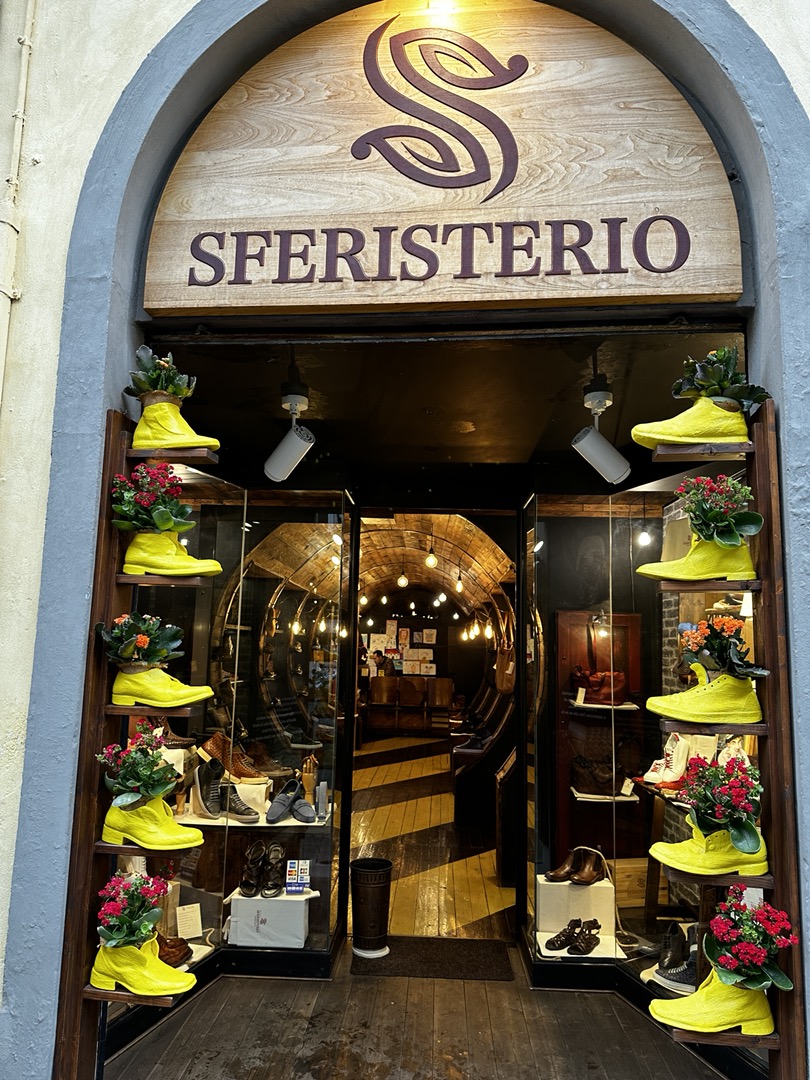
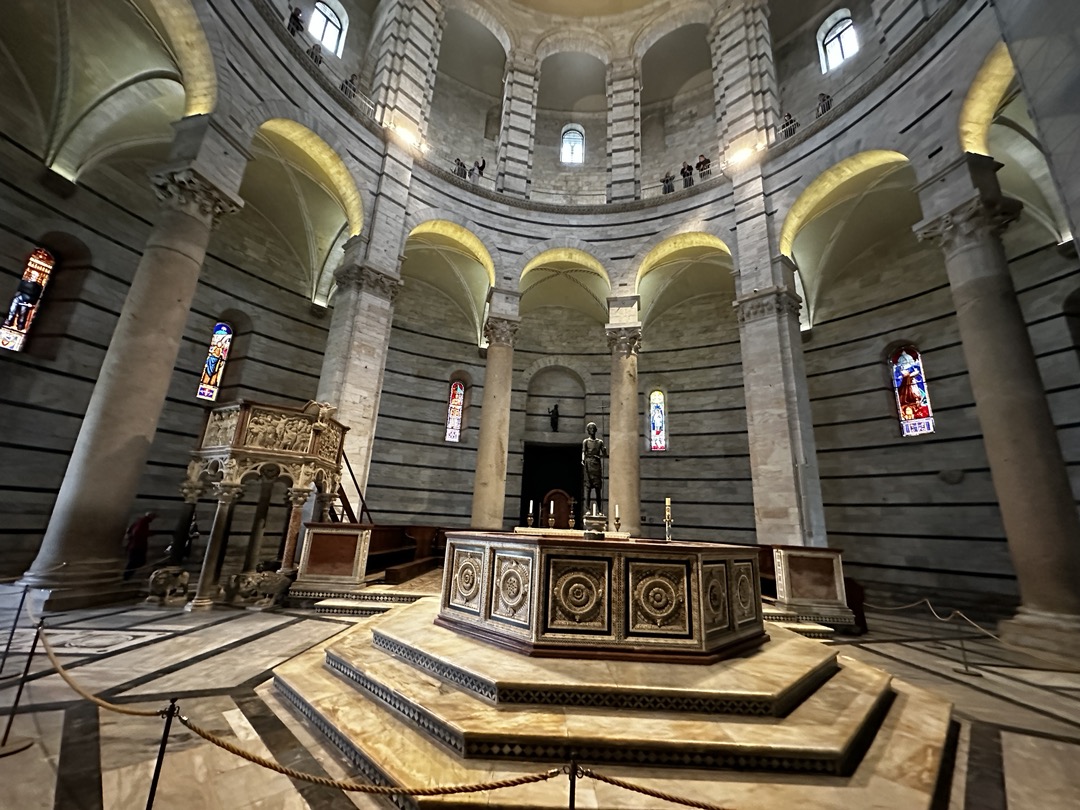
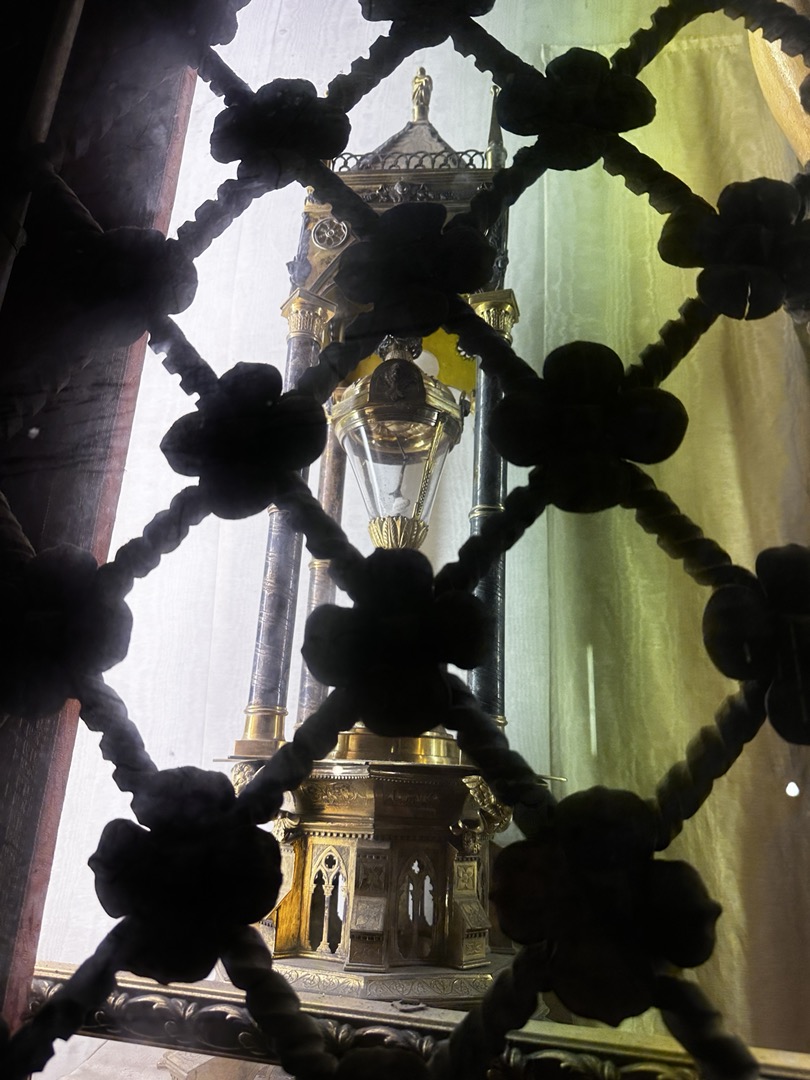
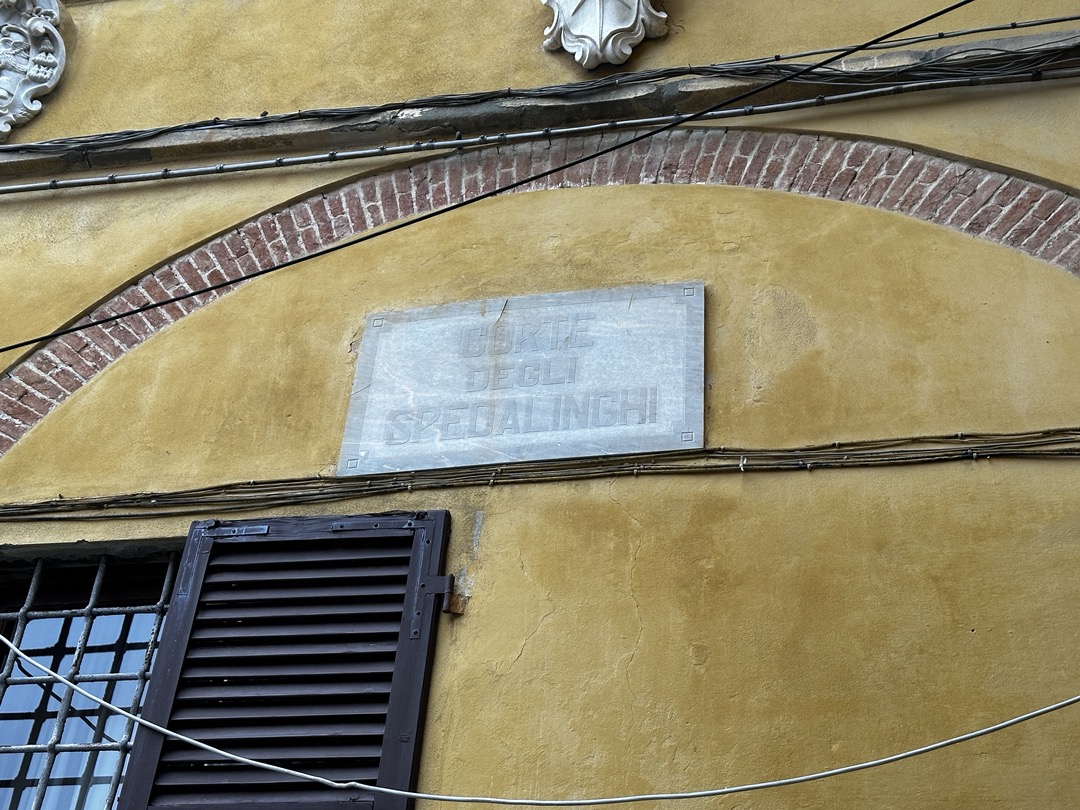
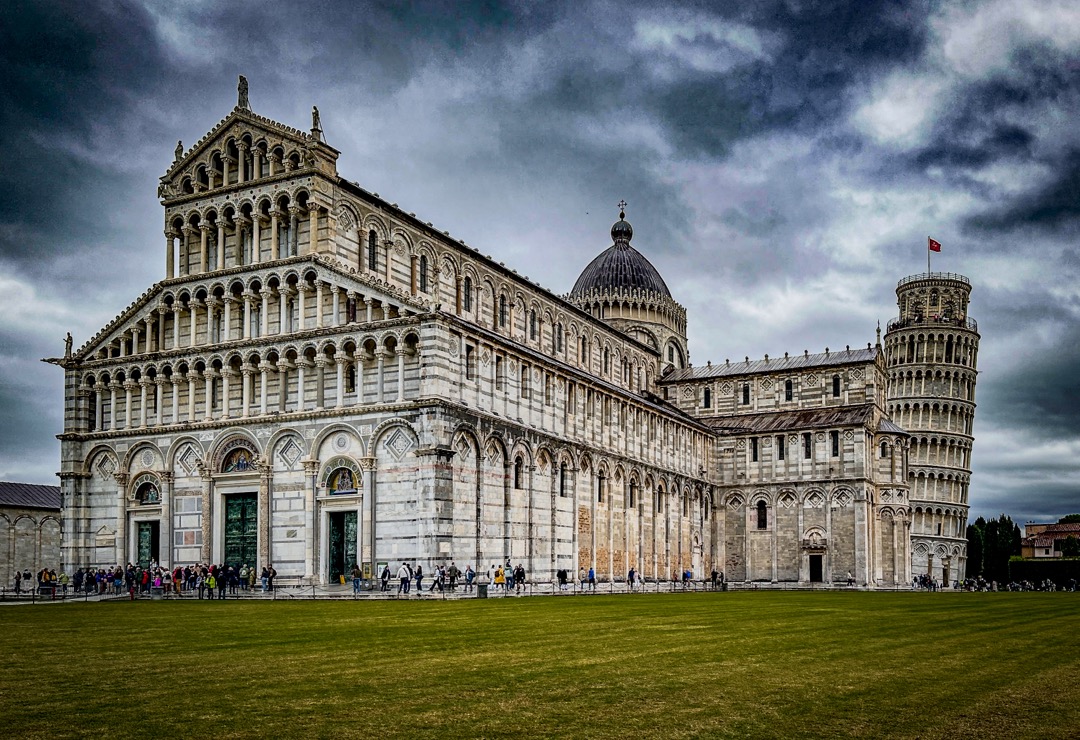
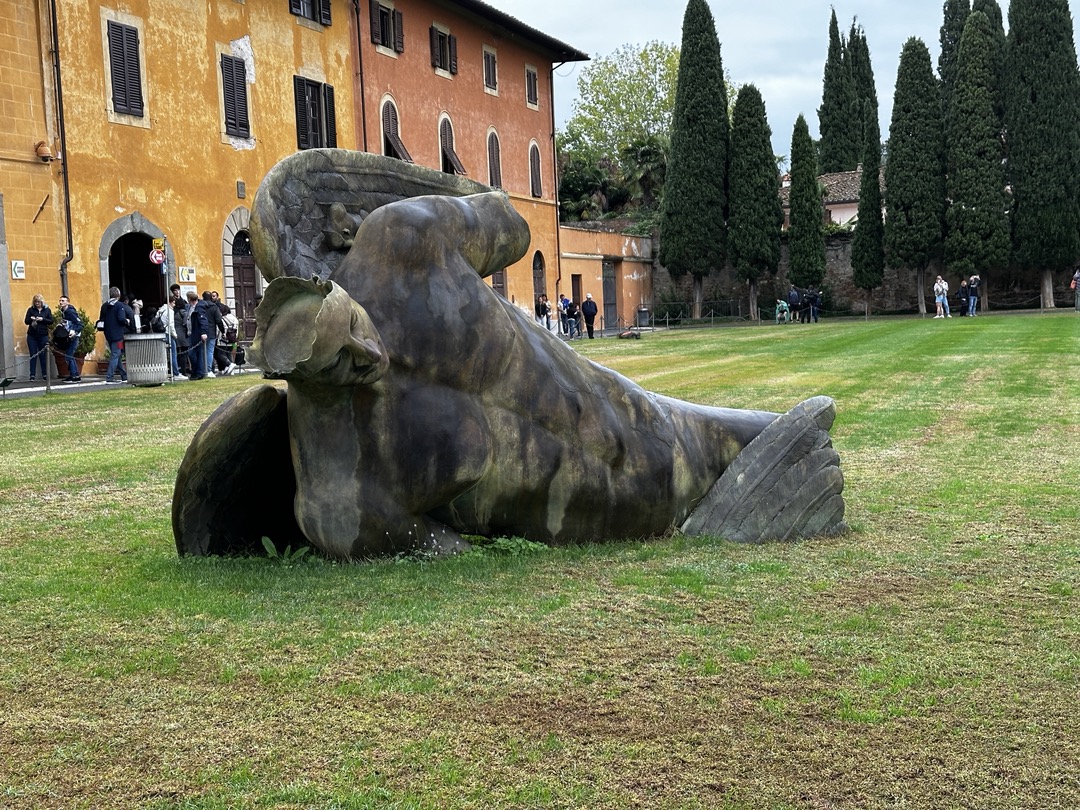
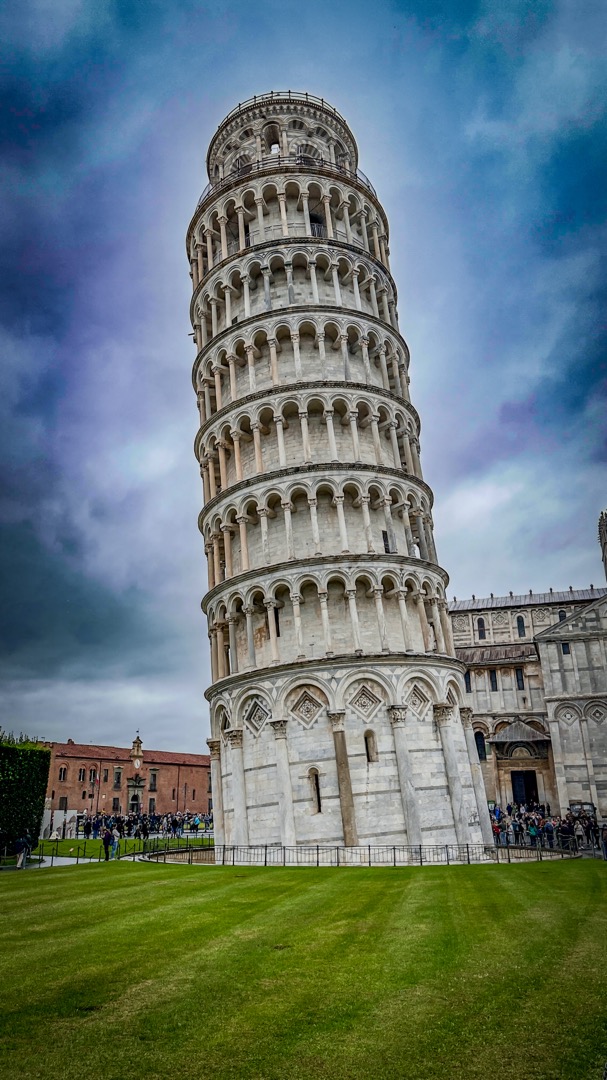
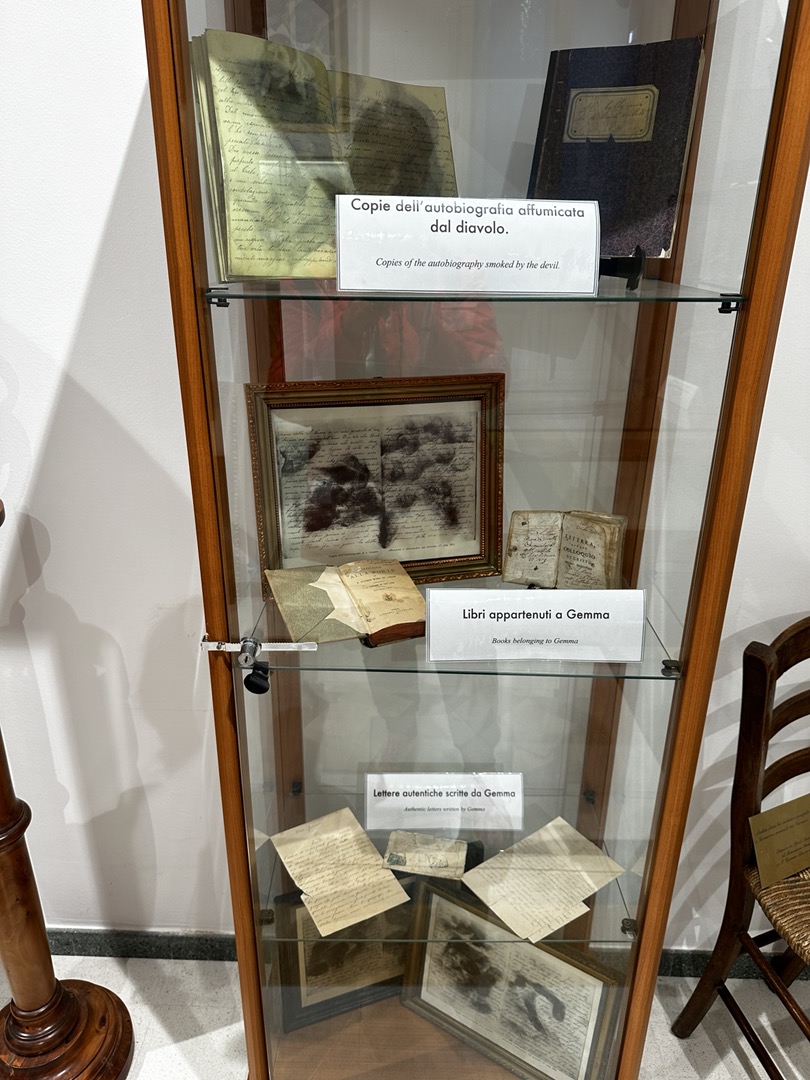
7 October 2024–Pisa and Santuario di Santa Gemma: We awoke to a drizzly day today, but it did not end up being as wet as we anticipated. We went to Pisa to visit the Piazza dei Miracoli, featuring the Leaning Tower, the Duomo (Cathedral), Baptistry, and Monumental Cemetery. Of particular interest for me was the Ospedale di Santa Chiara, more specifically, the original one. From Pisa, we drove through the walled city of Lucca, intending to visit the Santuario di Santa Gemma. The Leaning Tower of Pisa is beautiful! It does, indeed, lean, but somehow, even after all these years, it manages to hold the weight of many visitors daily as they attempt to climb to the top of the tower and/or just wander within it. We were happy to just look at it from the outside. THAT is, after all, where one sees its leaning demeanor! The Duomo is huge, and it is filled with huge paintings, gold-looking ceilings, sculpted heavy doors, and the crypt of St. Rainieri. The Baptistry is completely separate from the Duomo. It has a distinctively round, cylindrical shape, with a huge Baptismal “Font” centered within. There is a walkway high up above the Baptismal Font, lining the circumference of the edifice. Interestingly, one female staff member walked to the center of the structure, and, without a microphone, hummed some tones. The sound was beautifully audible and sustained, just as the sound of a piano key is prolonged/sustained via the sustain pedal. A male voice responded in kind. The same phenomenon occurred. The phenomenal acoustics lend themselves to choral concerts, probably from an elite Pisa choral group, judging by the banners inside the Baptistry. The Monumental Cemetery is an impressive ivory-colored structure, filled with in-ground graves beneath the floor on which everyone walks, empty bulky/artistic bulky crypts lining the interior walls, and walls with impressive huge frescoes (they cover the wall areas completely, actually, of various Biblical scenes, or a medieval rendition of Hell (Inferno), or Heaven (Paradiso)….The lawn outside of the entryway exhibits a dark statue of “The Fallen Angel.” The piazza and immediate surroundings provide plenty of opportunity for purchasing souvenirs of all kinds as well as grabbing a coffee/baked good/even a meal. One store that caught my attention as we walked away from the Piazza was a store with a “spherical” theme. In the end, it appeared to have been a shoe store. Catchy, though, for sure! But I did not want to leave Pisa without seeing one of those Spedalini (In the Middle Ages and 1800s, people would, for various reasons, drop off infants in a “wheel” that could temporarily hold a baby. This was intended to permit anonymity for the mother and for the child because the mother could drop off the baby any time of day or night, ring the bell to let those on the inside (usually affiliated with the Catholic Church) know that a baby was in the wheel, rotate the wheel so that the baby could be transported inside the building, and the baby taken by a staff member on the inside for safety and protection. This was done often in this region of Italy at the Spedale di Pisa affiliated with the work of the Hospital of Santa Chiara (St. Clare) di Assisi. I did not see the wheel. I inquired about it and was told that the original hospital of St. Clare was under a maintenance scaffold and that we would not be able to see even the informative plaque about this practice. I was told that the structure was being transformed into a hotel. I did find a note posted on the building about a restauration project…. Unfortunately, the photo did not come out as clearly as hoped. However, we did find a plaque that suggested that this was the Cortile Spedalinghi, so that was at least a memorial to the caregiving that this hospital of Santa Chiara provided for these abandoned infants. We visited the Church of Santa Chiara di Assisi, which is next to the original hospital complex. Of note therein is a precious relic of the Crown of Thorns imposed on Jesus when he was crucified! Before leaving this area of Pisa, we could not help but capture an image of the walls/fortification surrounding Piazza dei Miracoli. Finally, we would go through the walled city of Lucca in order to travel to Coreglia from Pisa, so we took the opportunity to visit the Santuario di Santa Gemma, one of Lucca’s own 20th Century Saints. My mother was deeply devoted to Santa Gemma, so this visit was not only for me. It was for my mother and for all in the family who also were/are devoted to this “modern-day Saint from home.” Her crypt is at the altar of this Church. The Passionist nuns still live and work within the cloistered complex, so we did not see any of the nuns. But a staff member permitted us to peruse the book shop containing displays of mementos that belonged to Gemma during her lifetime. Of particular interest to me were pages from her diary that have blackened staining on them such that one cannot read the words beneath them. The caption stated that the Devil smoked these pages! It was not thoroughly dark when we drove to Coreglia, and it had been moist and cloudy all day. Additionally, the Serchio and the Ania Rivers flow through this geographic region. Therefore, white fog hung low on the mountainsides at times, creating a haunting and beautiful image.

 Our Travels