
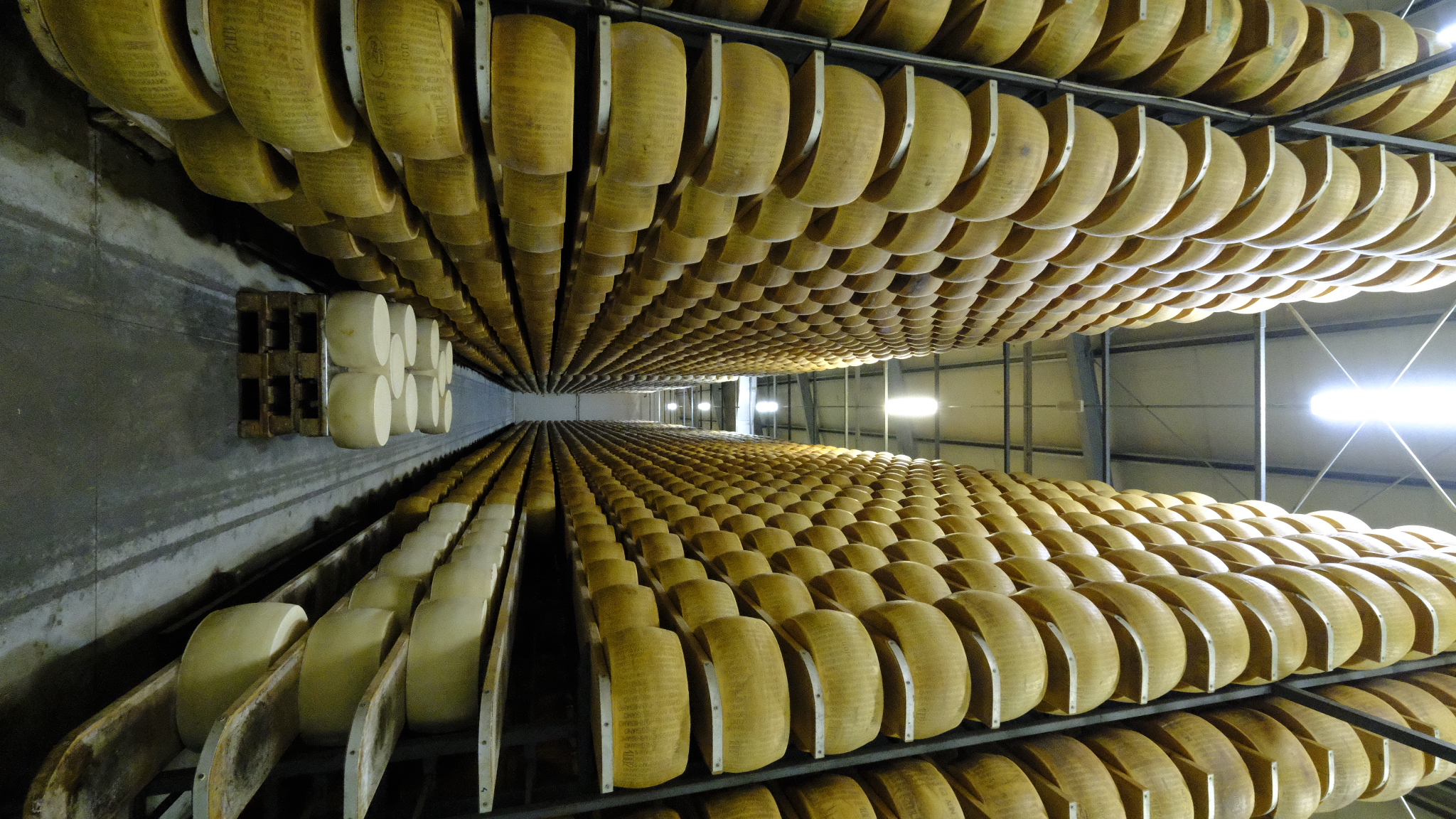
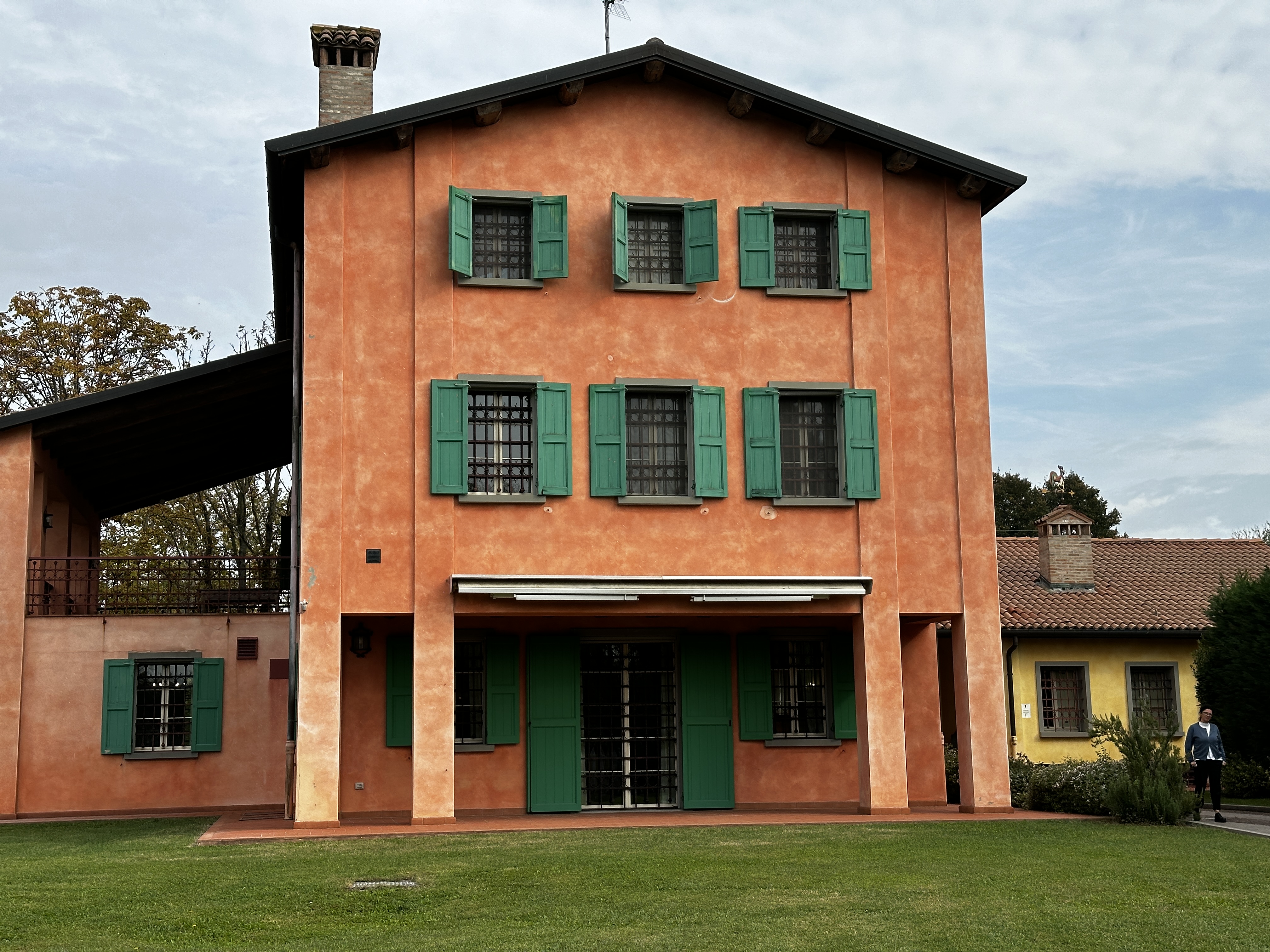
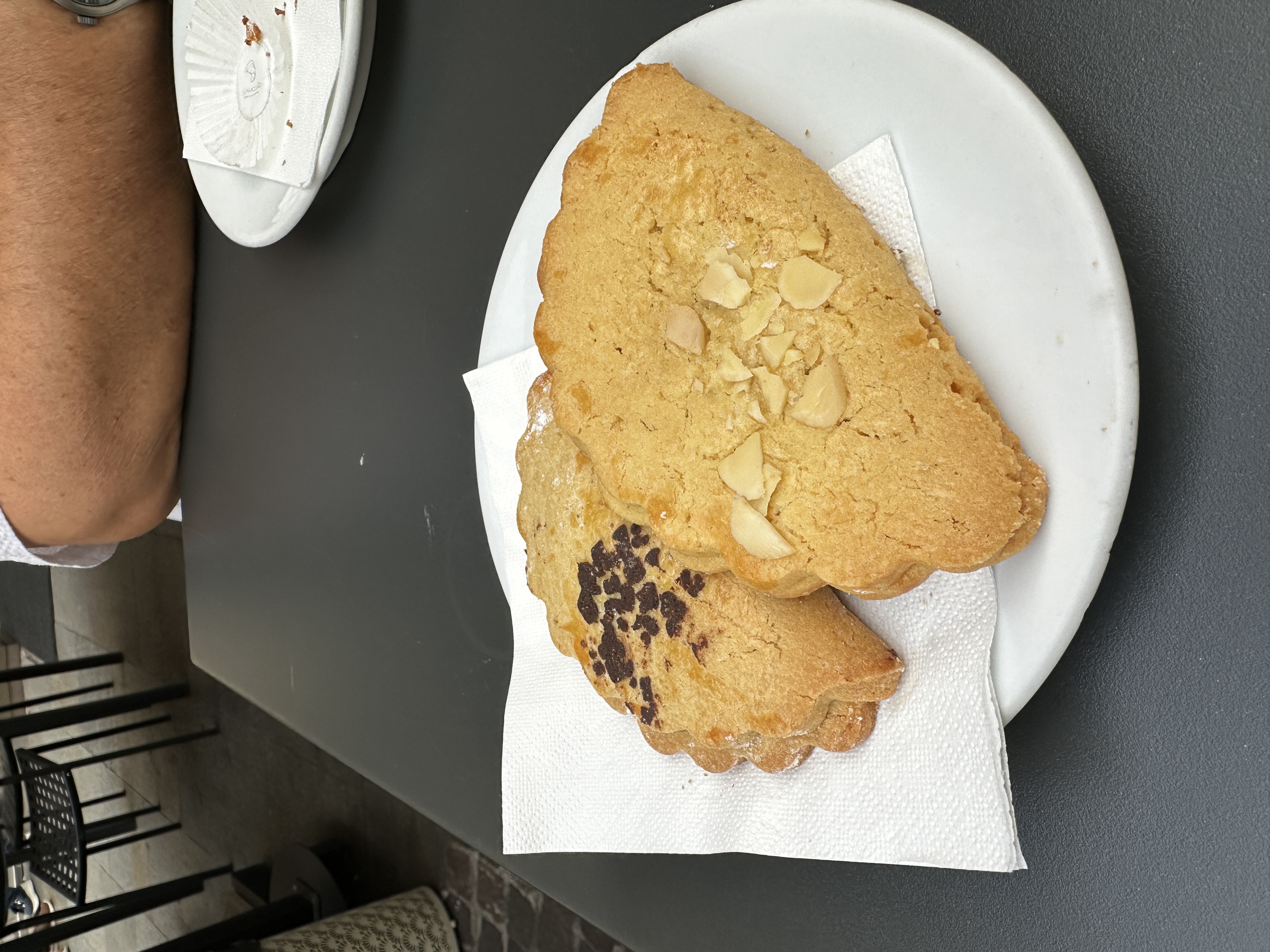
14 October, 2024—Thanks to our resident roosters at this B&B in Castelfranco, Modena, we woke up bright and early this morning in order to have breakfast and drive to the local Caseificio BioReggiano (Parmigiano cheese producer) for a tour. Following the tour, we had a serendipitous find: Luciano Pavarotti’s house in Modena, Italy. The historic center of Modena was next on today’s itinerary, followed by a drive to the historic center of Parma, Modena. Most Parmesan cheeses we find in grocery stores in the U.S. are not DOP. DOP means that the final cheese product has earned the prestigious approval of the DOP certifies that this cheese was produced only in an authorized facility and that everything about each Parmesan cheese wheel has complied with all of the regulations for such certification. This means that even the cow breeding and the foods they eat must conform with DOP standards: example, no antibiotics given to the cows, mixed breeds of cows, organic grasses fed to the cows, respectful humane care given to the cows at all times, and so on. .Additionally, the cheese has to be handled a specific way. It must be aged a minimum of 24 months. The cheese wheel must make specific thumping sounds after being tapped by a mallet when it has reached 12 months,….During the process of Parmesan cheese making, nothing is wasted. So, some of the byproducts are turned into ricotta, some become caciotto, some become packaged cheese foods that are appropriate for young children, and some become grated cheese products…. We tasted differently-aged parmigiano cheese products as well as ricotta. Naturally, a recommended pairing for the cheese was DOP Balsamic Vinegar from Modena, and this particular one had been produced at our B&B by our hosts. As we departed the Farm, we saw a road sign about Pavarotti’s house and museum…. Sure enough, Luciano Pavarotti had lived in his house in Modena for the final four years of his life. That house is now turned into a museum, but we were just happy to see it from the outside. The property and external appearance of the house are beautiful! Large house, good amount of manicured land, and all of this located in a bucolic farm area away from the hustle-bustle of Modena, the city. We could not stay in the province of Modena without visiting Modena city, so we drove to its historic center. Of course, there was a huge Cathedral/Duomo there! This one was a UNESCO site, and it was created in the Romanesque style. There were large animal/sphinx-like/gargoyle-like stone sculptures at the outside entry, and lots of large dark stone structures inside. The Baptistry was separate from the Cathedral but adjacent to it. The bell tower was interesting because to me it looked as if it was leaning, think leaning tower of Pisa, for example. Evidently, Pisa’s tower is not the only one that’s tilting lately! Naturally, all good major city centers must have at least one palazzo (palace), and Modena had a huge Ducal Palace, for example. There were stores, restaurants, and bars at ready access, but…today was Monday, and in Italy, many establishments are closed on Mondays! Additionally, even if they were open today, they might close at 2 or 3. Some restaurants will then reopen at 6 or 7 or 7:30 P.M. for dinner…. So, Modena was a little quiet today. The city surrounding the city center definitely showed its age. After all, Modena has lived through major eras of art, music, and wars…. The other city we could not possibly miss was Parma, as in, Balsamic Vinegar, yes, of course, but also prosciutto di Parma (a ham-like meat that is served raw or cooked) and Parmigiano cheese! Its town center also had a Cathedral, and this one was very pretty inside. Parma is very proud of a talented artist from long ago named Antonio da Correggio. His frescos and artwork could be seen throughout the inside domes and chapels of this Cathedral. It is interesting to see the forms of artwork and construction of these grand edifices over the past centuries. Whereas I thought the Cathedral in Modena had been a bit foreboding, this one was “brighter” all the way around. The activity level in the historic center of Parma was different from what we had just experienced in Modena about an hour-and-a-half earlier. This could simply be due to timing, i.e., perhaps the bars, cafes, and restaurants in Parma had already paused for the afternoon and were now returning for the afternoon and evening…. The houses leading away from the town center were colorful and therefore delightful to view. We are not in the mountains this week, so there was no urgency to return to our B&B before pitch-black dark. Thus, we waited until 7 P.M. for dinner (and that’s another thing in Italy so far: it is advisable to call ahead and reserve a table for dinner) at a local trattoria that had been recommended to us for its reasonably-priced regional foods. I had tortellini with porcini mushrooms, and Dad had a cut steak. We shared roast potatoes (I always look for these and order them whenever they’re available). The real star of tonight’s meal, however, at least, for me, was a pastry that we shared: custard-filled, beautiful, large, tasty, and crisply-flakey Mille-feuilles treat!



 Our Travels