
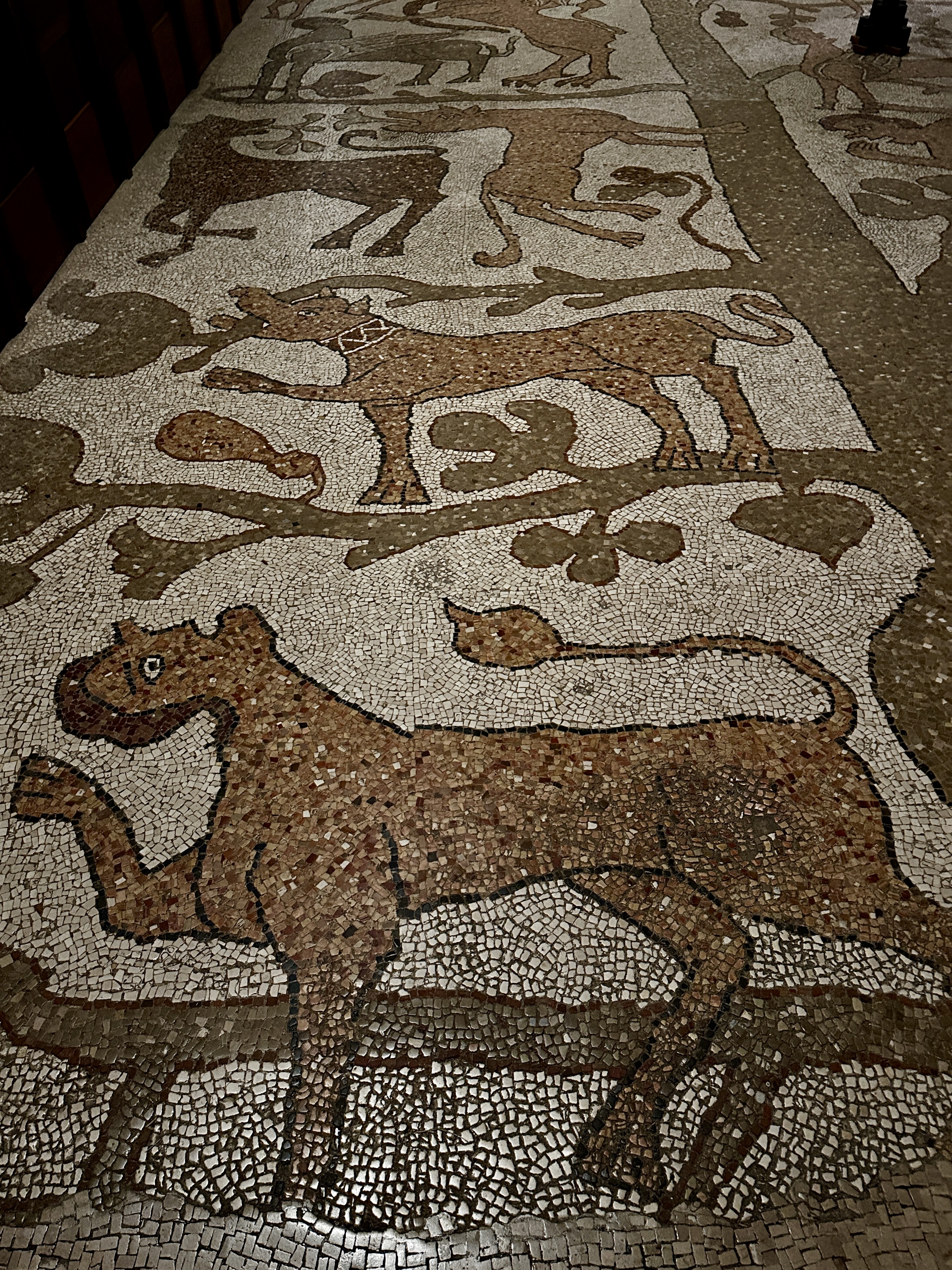
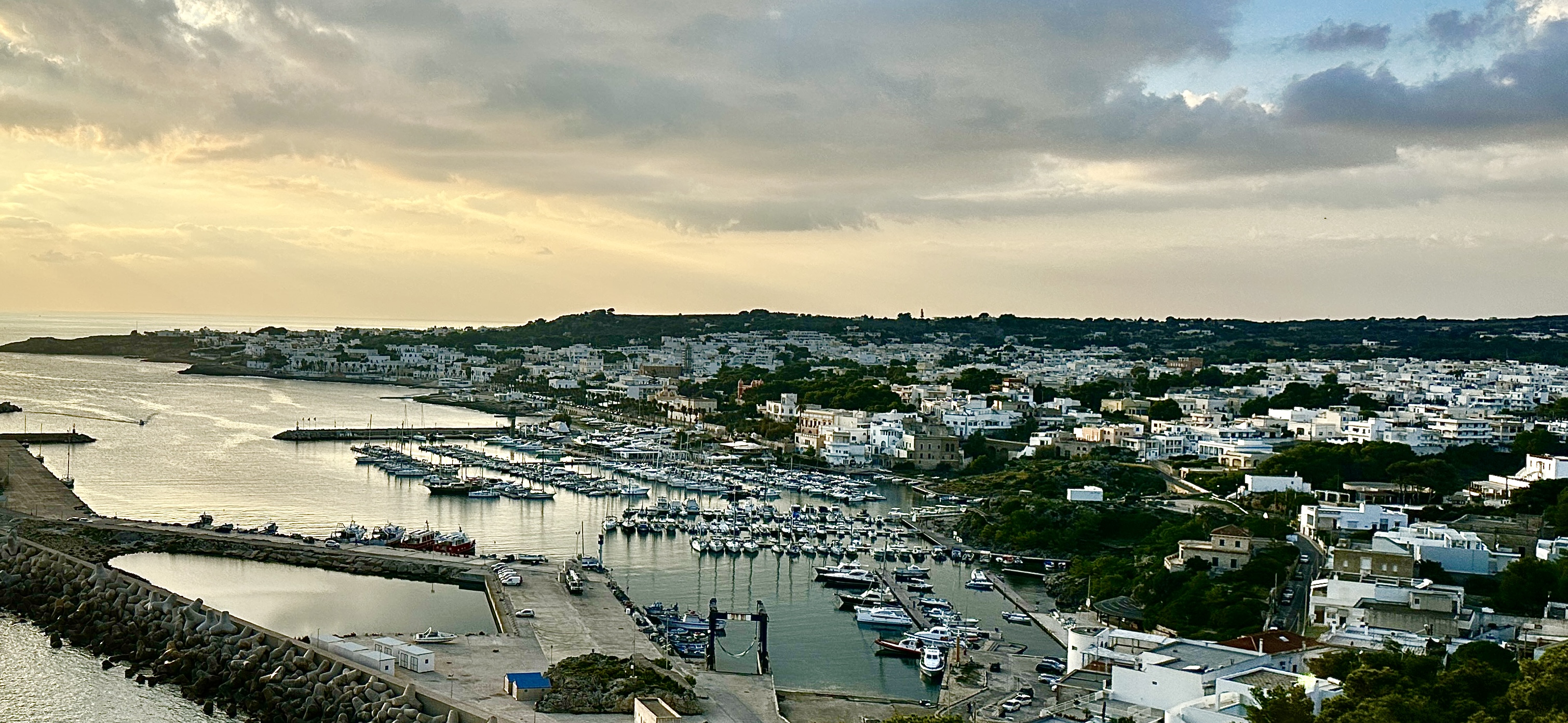
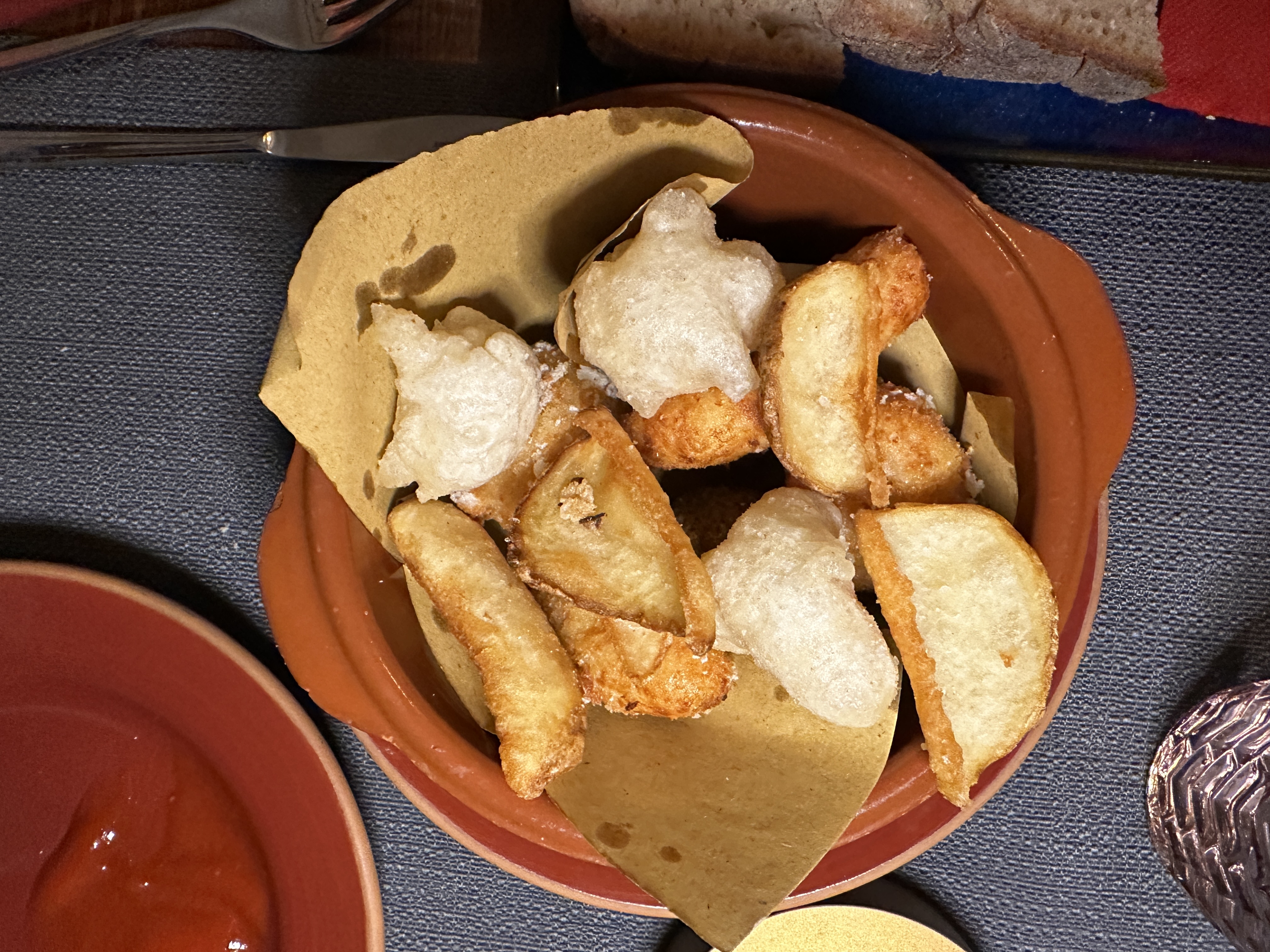
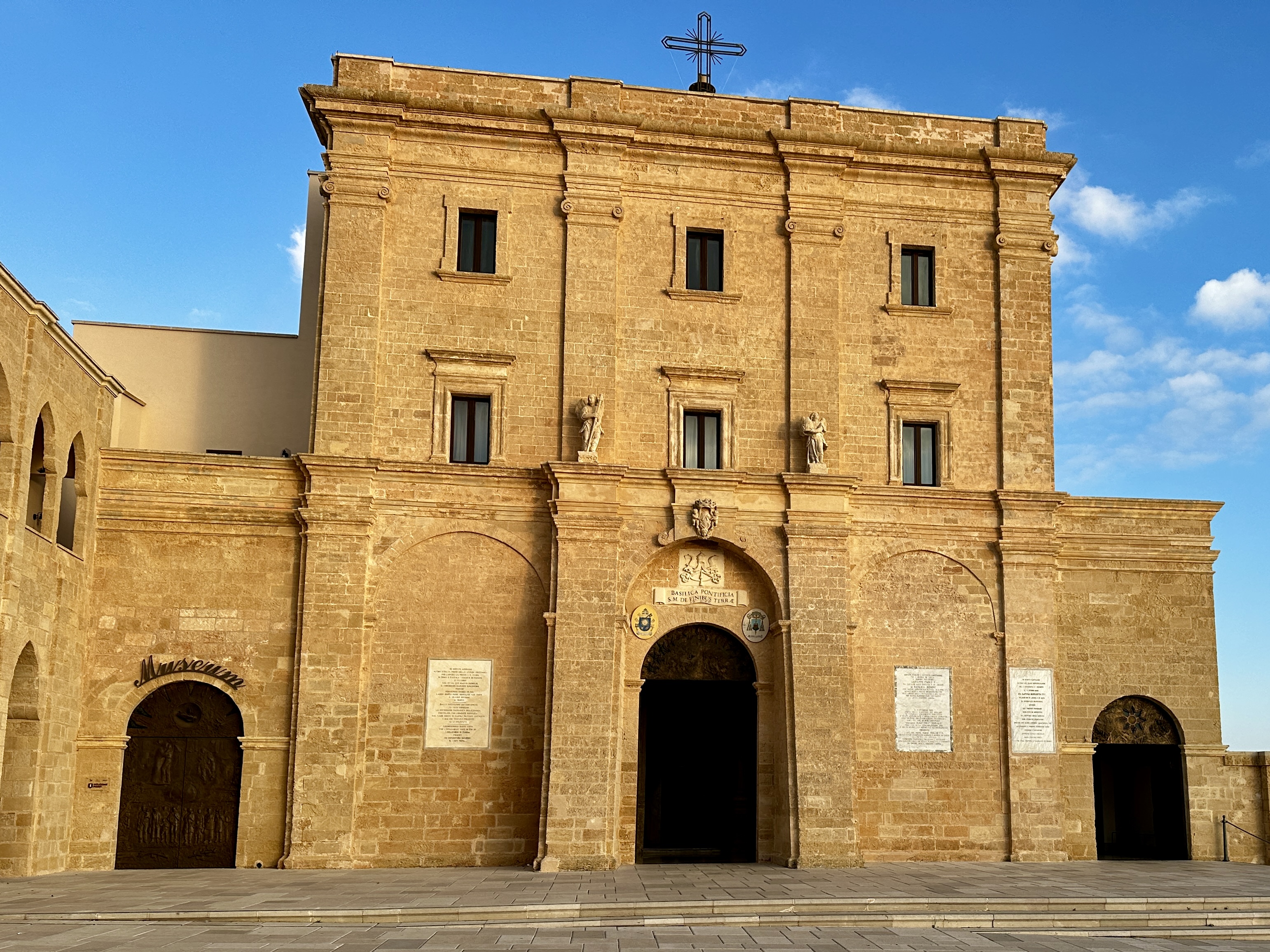
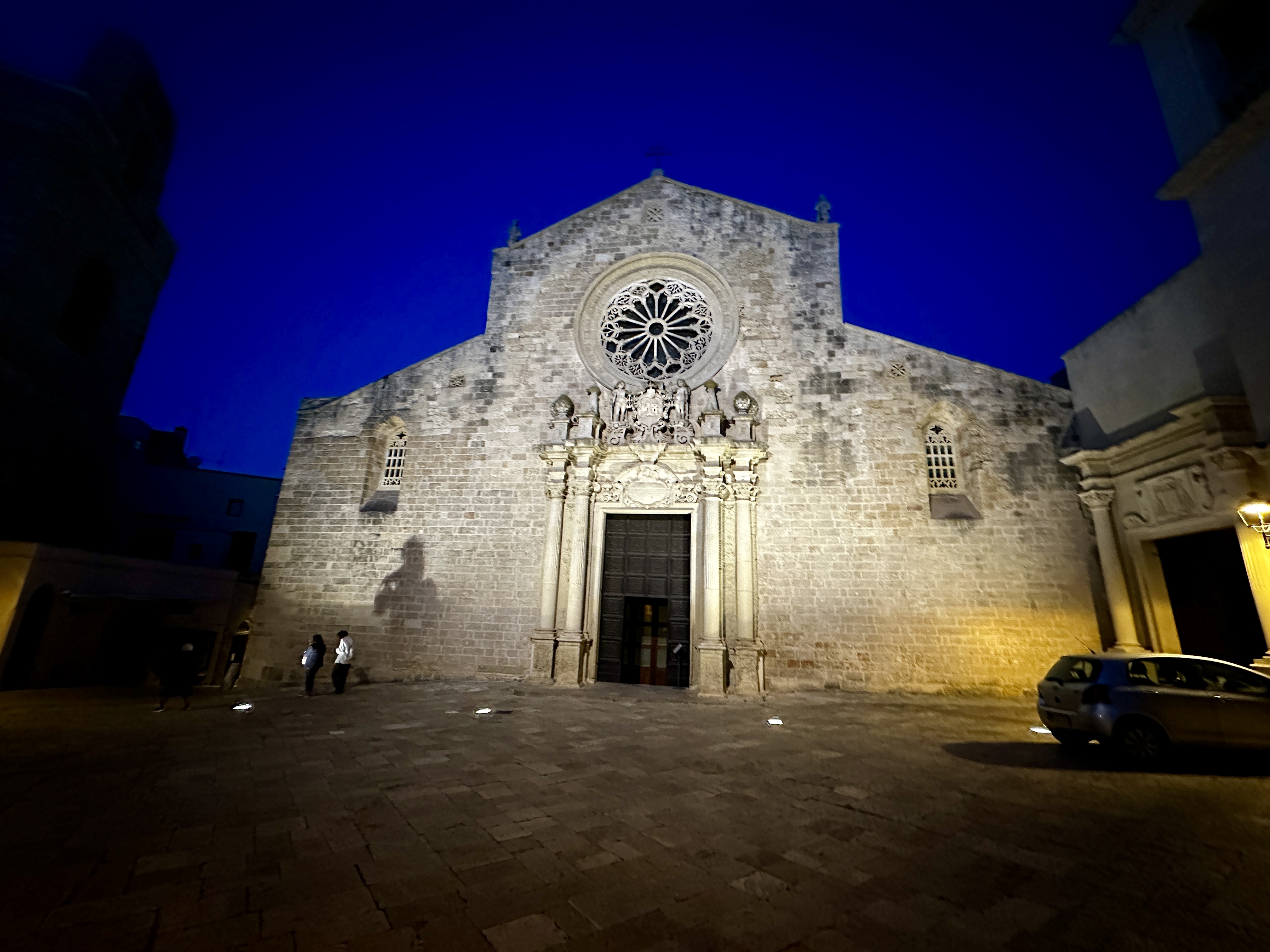
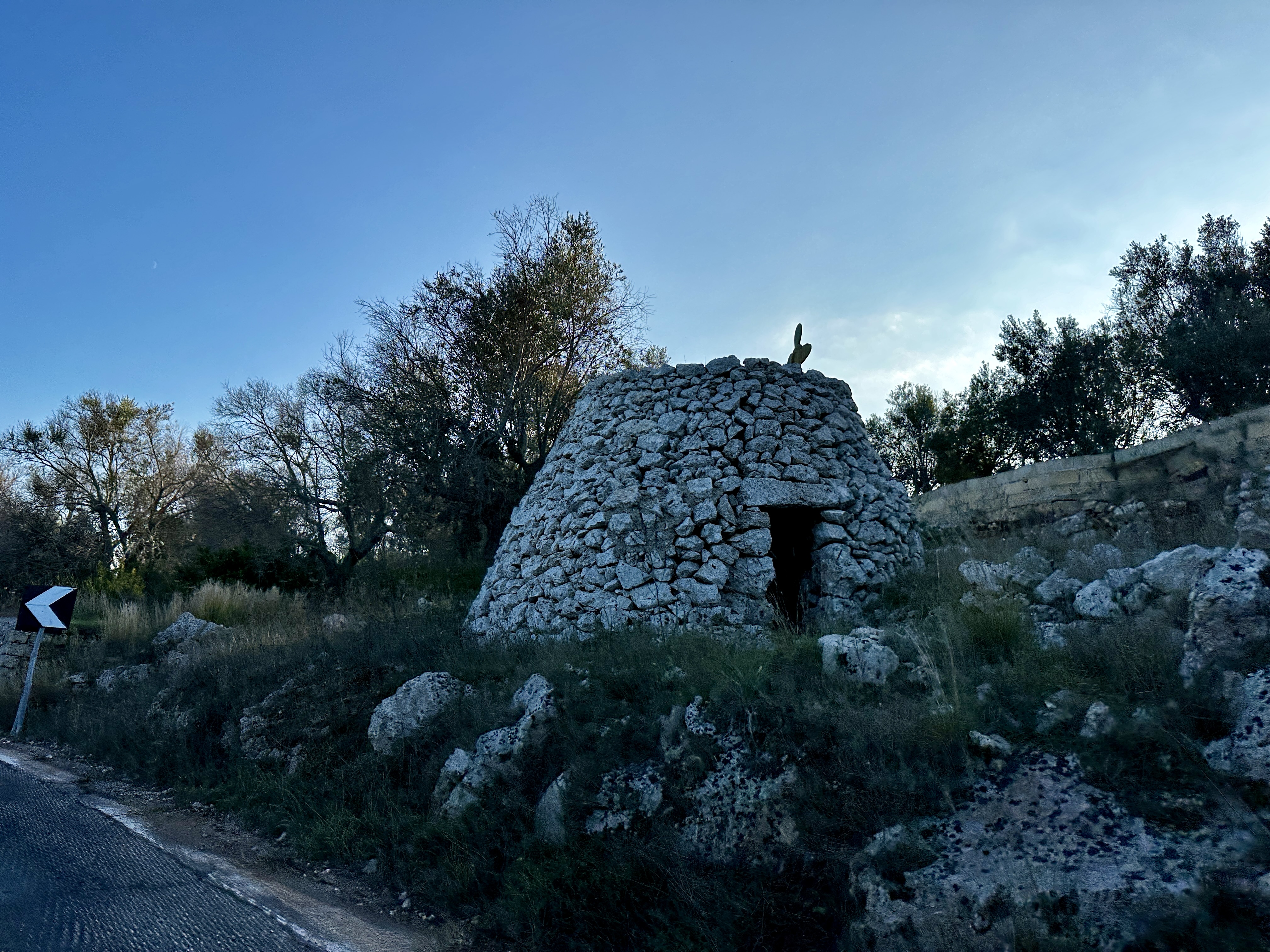
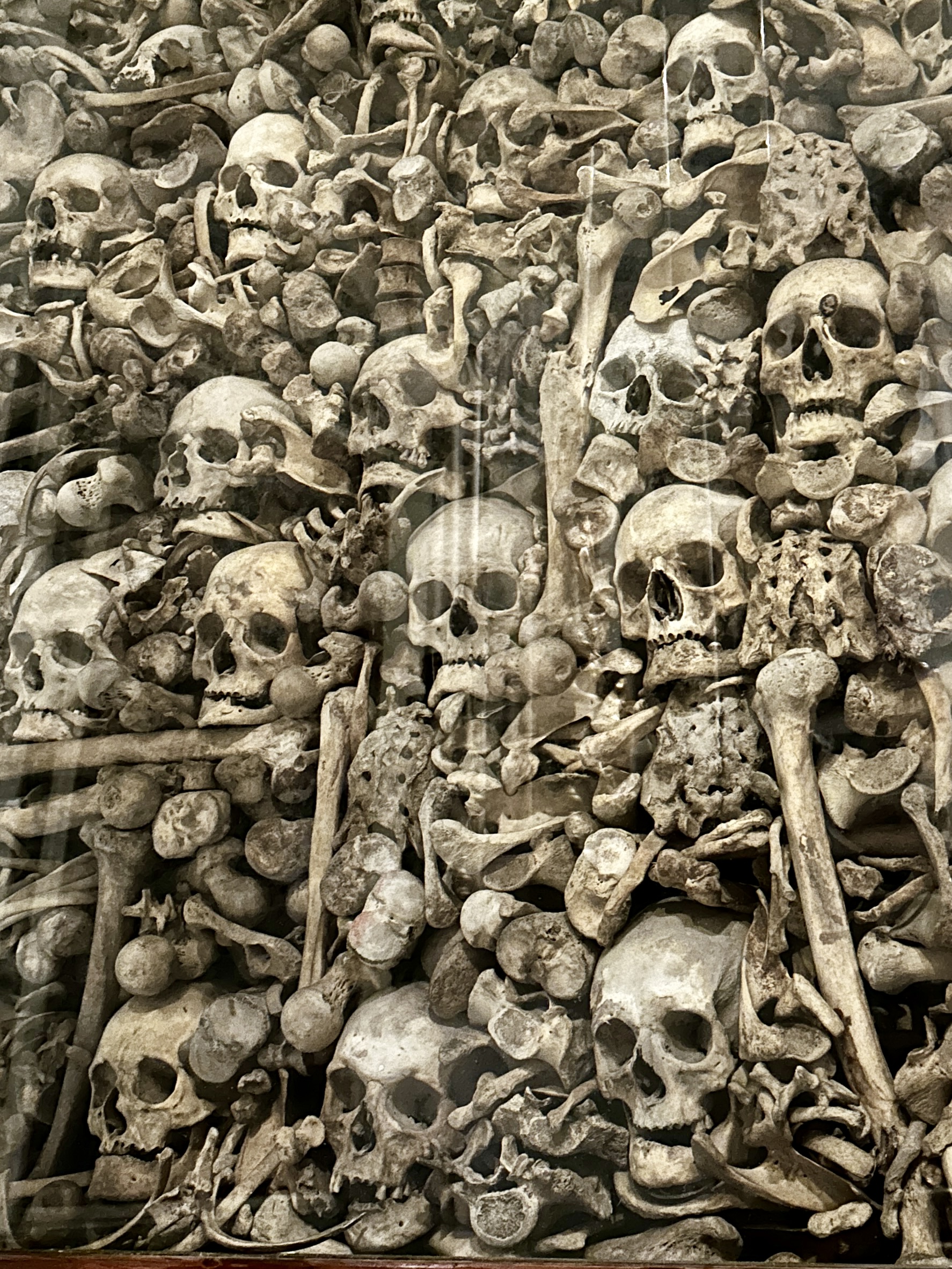
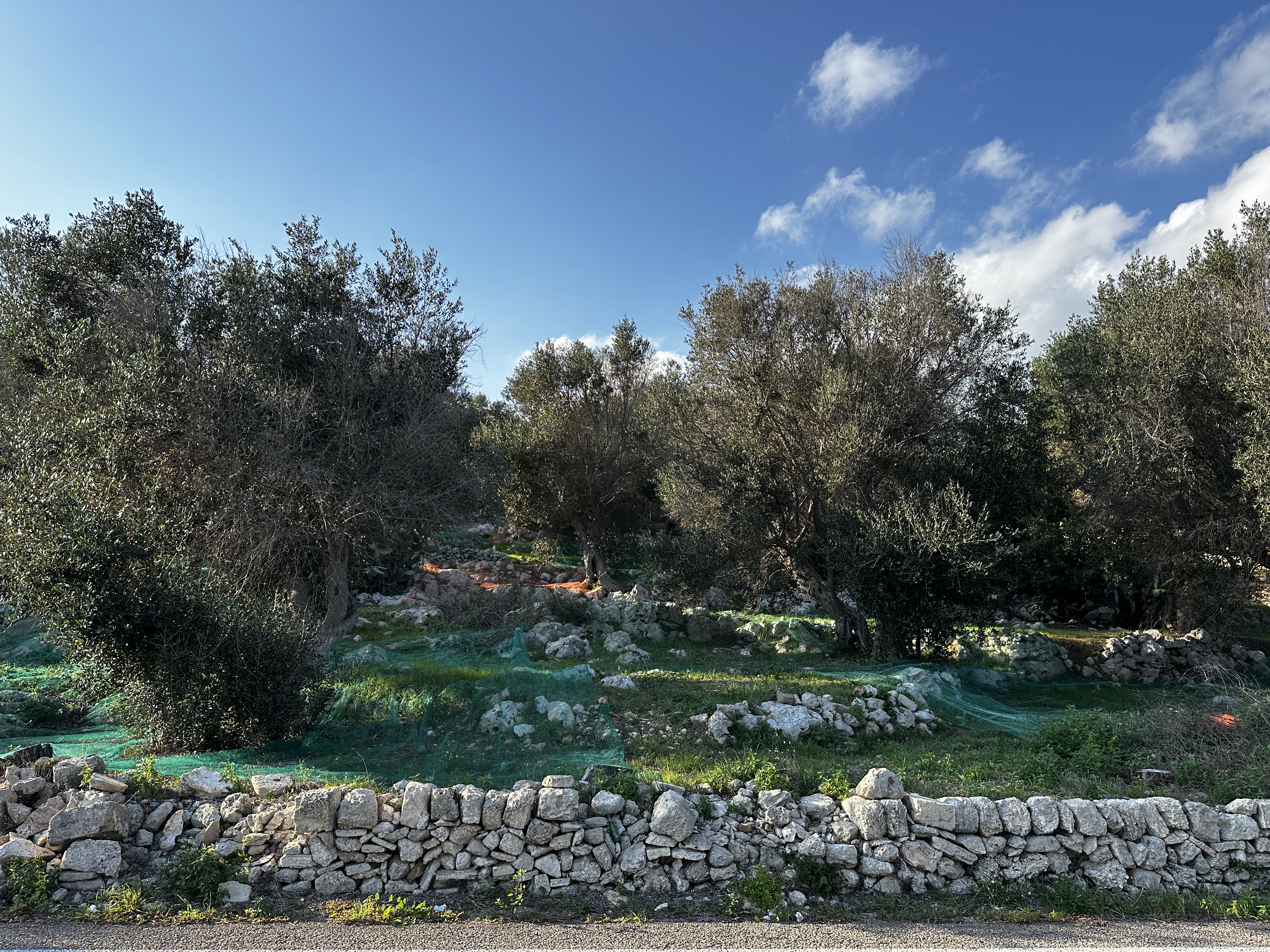
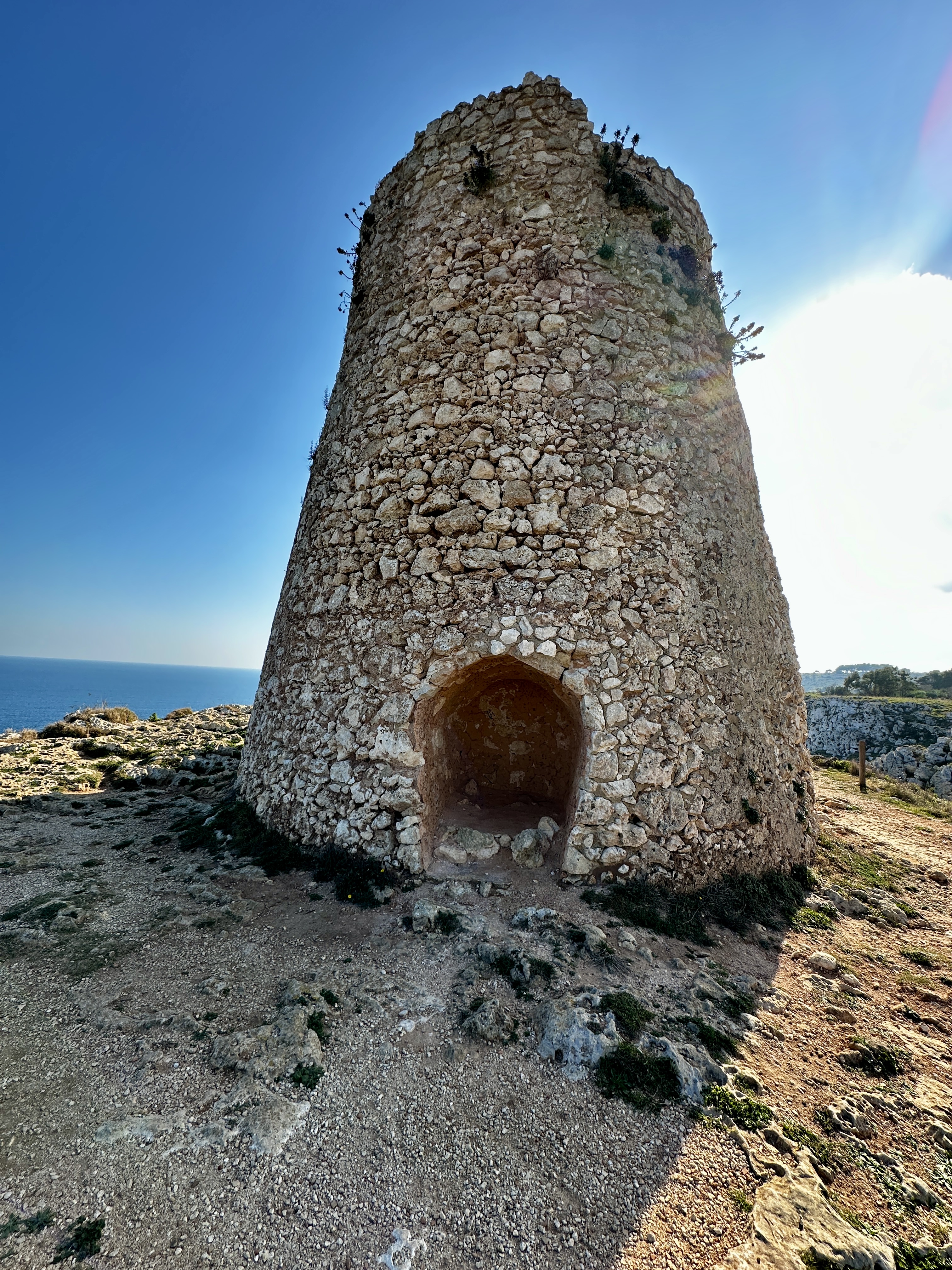
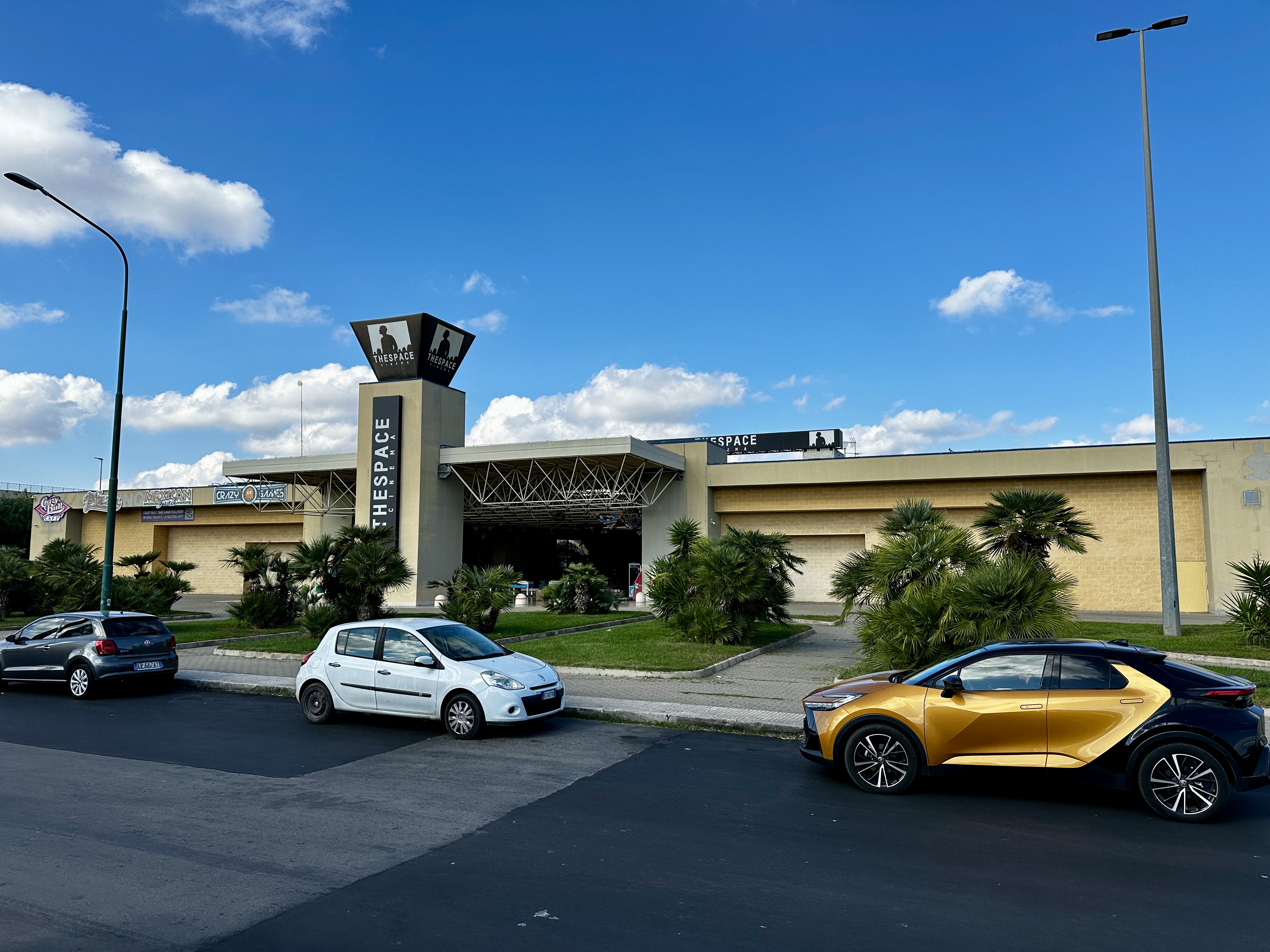
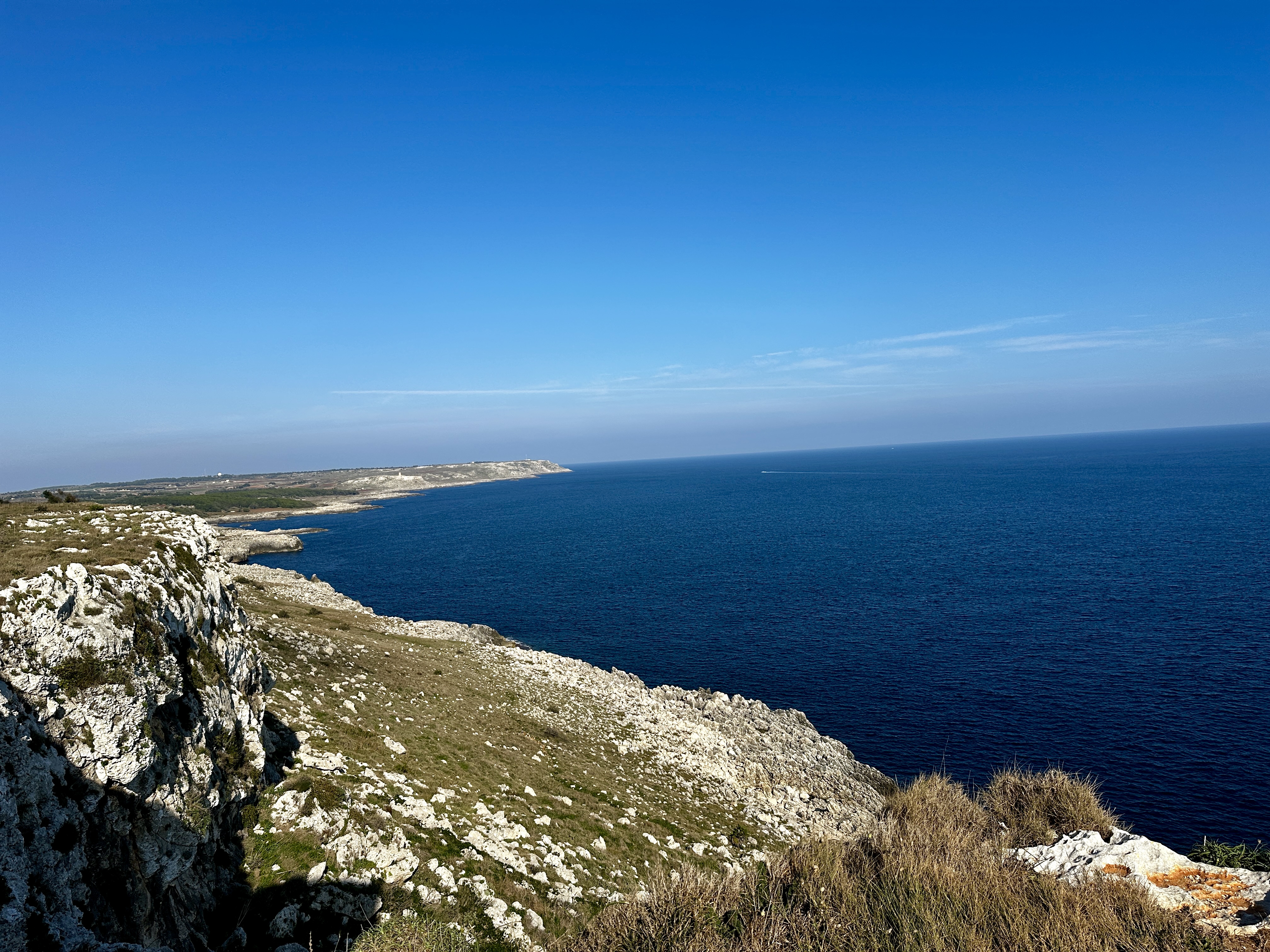
7 November 2024: Drive Along the Eastern Heel of the Italian Salento Peninsula: Lecce, Puglia to Leuca, Puglia—It was a beautiful sunny and warm day in Porto Cesareo this morning when we awoke, so we decided to tour the heel part of Italy, although we only got through the eastern part before it became dark and we turned back toward “home.” Nevertheless, it was a beautiful journey, with some stunning scenery, especially from Otranto to Leuca. But, Porto Cesareo is on the western coast of the Italian heel, on the Ionian Sea. We had to cross the Italian peninsula in order to access the Adriatic, western, side. The first city we came upon was Lecce. We stopped at a McDonald’s there and were greeted by two pooches in the McCafe line. There was another larger pooch politely accompanying its Human inside the store at a table. Yes, dogs are treated quite humanely throughout Italy. Of course, they were all leashed. Opposite the McDonald’s was the first movie theater I’ve seen in a long time, bordered by a Mexican Restaurant (the first one I’ve seen in Italy thus far), and other examples of Western influence. The rest of Lecce seems to be pretty large, with huge imposing concrete-looking structures, such as Churches, plenty of stores and shops, a university, music schools, palazzos, soccer paraphernalia stand/colors (red and yellow) and so on. The city seems to be pretty old, with some buildings showing their age. Vineyards and olive groves pepper the area just outside of the town center sections. We traveled to Otranto, Puglia on the eastern coast/Adriatic Sea side of the Italian Peninsula. However, we decided to travel on and return later in the day when the Cathedral would reopen at 3:00 P.M. We headed toward the southern tip of the heel, where the Adriatic and Ionian Seas join and split (the Adriatic on the East side and the Ionian on the west coast of the heel). The city we sought there was Leuca. The road along the Adriatic coast between Otranto and Leuca was stunning! Lots of rocky cliffs, light-colored, framing the azure Adriatic Sea. Plenty of palms, cacti, flowers, and other shrubs create a lovely landscape. Gardens along the “hill”sides gave an expanded definition of what a rock garden might look like. We passed several rocky structures on the hillsides that looked like rocky upside-down thimbles—much larger, of course. And, we passed several “torri”, towers. These were used as watch towers to protect against unwanted invaders by sea many years ago. We passed several small towns with restaurants, bars, cafes, B&Bs, villas, churches, and hotels. Most of the structures were white, not unlike Santorini, Ostuni, Mykonos, Alberobello—because the white color served the same purpose in these towns that can become quite warm, I suppose, in summertime. The whit coloring absorbs less heat from the sun during the summer. Interspersed among all of that beautiful whiteness, however, are yellows, oranges, and so on. Leuca was once considered to be the end of the earth that jutted out into the Sea, i.e.., the end of the Italian heel. Thus, there is a tall old lighthouse, and there is an old cathedral, called the Basilica of Santa Maria de Finibus Terrae. I love that name, Santa Maria of the End of the Earth! The sun was thinking about beginning the setting process over the Leuca and the Ionian Sea. It was brilliant as its rays were reflected in the water and formed a shadow over the predominately white Leuca city structures! We drove to Otranto. There, we were greeted by a huge Castle of Otranto, originally serving as a defensive structure against unwanted seafaring enemies. Tonight, it was hosting an art exhibit. But what we wanted to see was the Cathedral of Otranto. Not only does this Cathedral have a phenomenal mosaic that composes the floor of the Cathedral, but it also displays the bones of the 813 Martyrs of Otranto. When the Turks conquered Otranto in 1480, they demanded that the residents convert to Islam rather than to remain as Christians. When the residents declined, they were all killed, including their Archbishop. Men and boys 15 years old and over were killed; and women and children under 15 were sold into servitude. I believe that the 813 Martyrs have now been canonized as Saints. An obelisk and the majestic tall Leuca lighthouse appear to be standing side by side in the Piazza (but they are not side-by-side, of course). It was dark by now, so we dined at a restaurant in Otranto. The antipasto bowl that John and I shared had a mix of regional fried items, such as arancini with rice, eggplant “meatballs”, small curls of over roasted potatoes, and beautiful, scrumptious, I-could-eat-too-many fried bread dough balls. Dad had bombette (little rolls of pork stuffed with cheese and pancetta), and I had, wait-for-it…GNOCCHI Sorrentina.


 Our Travels