
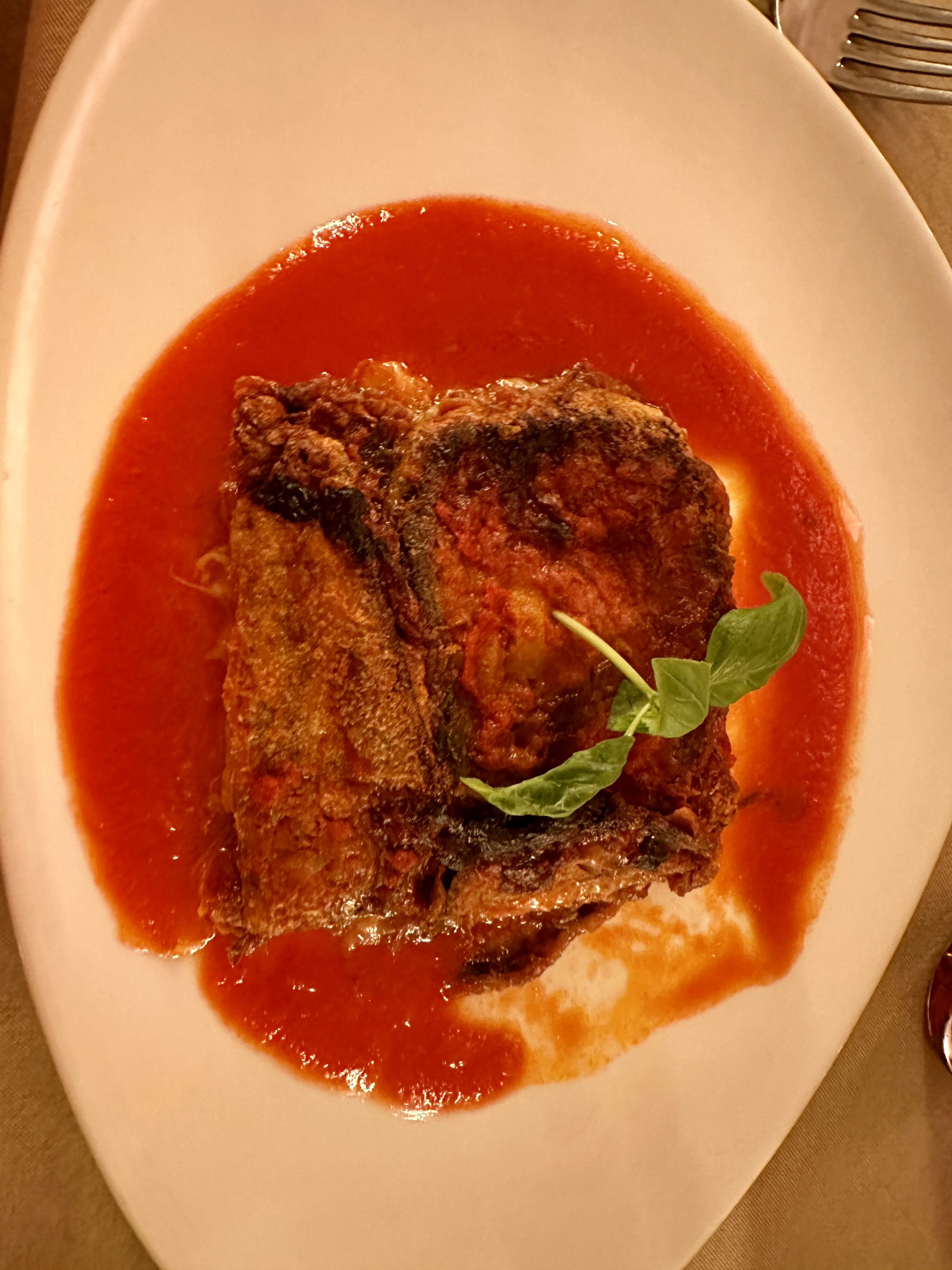
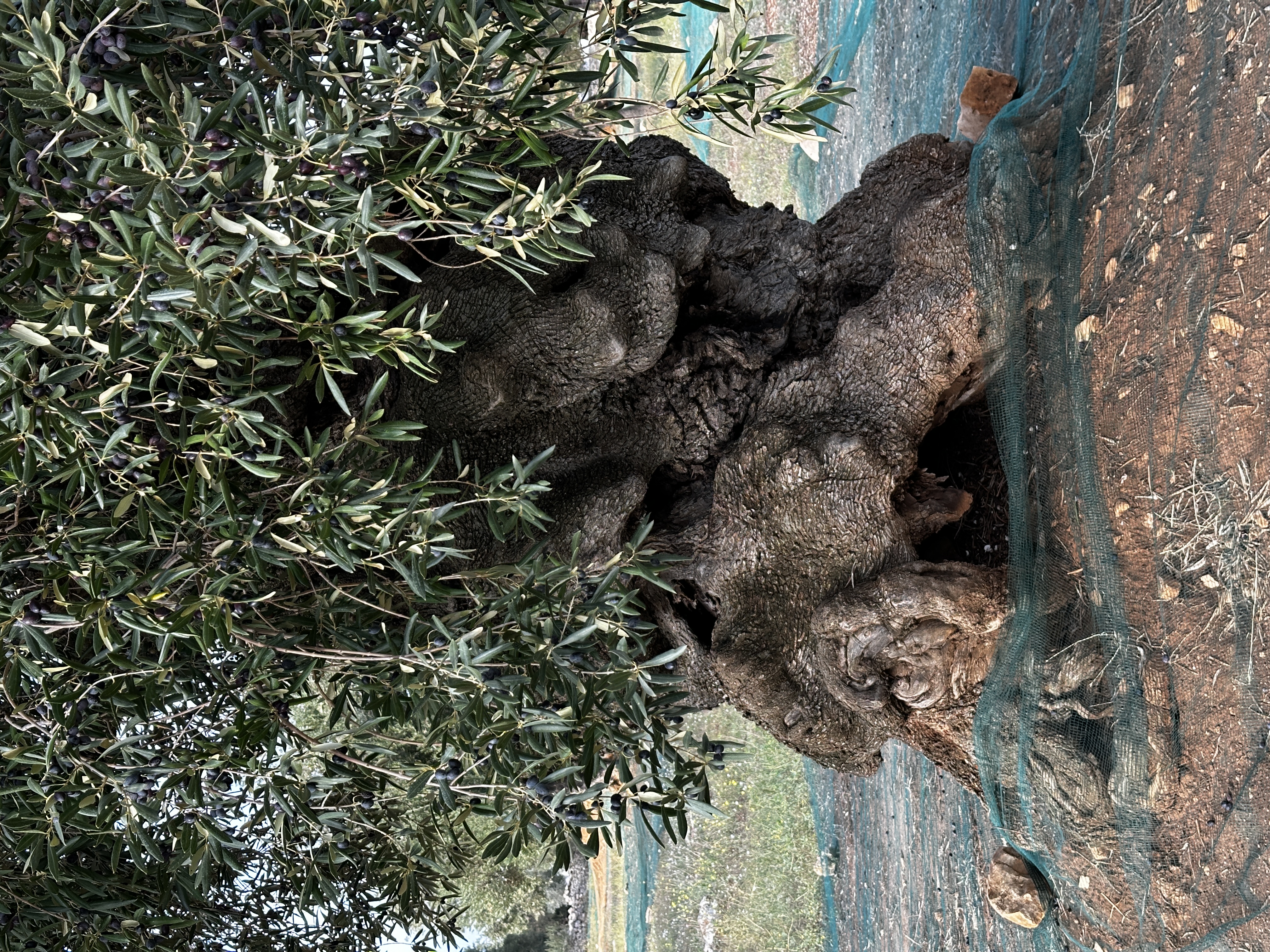
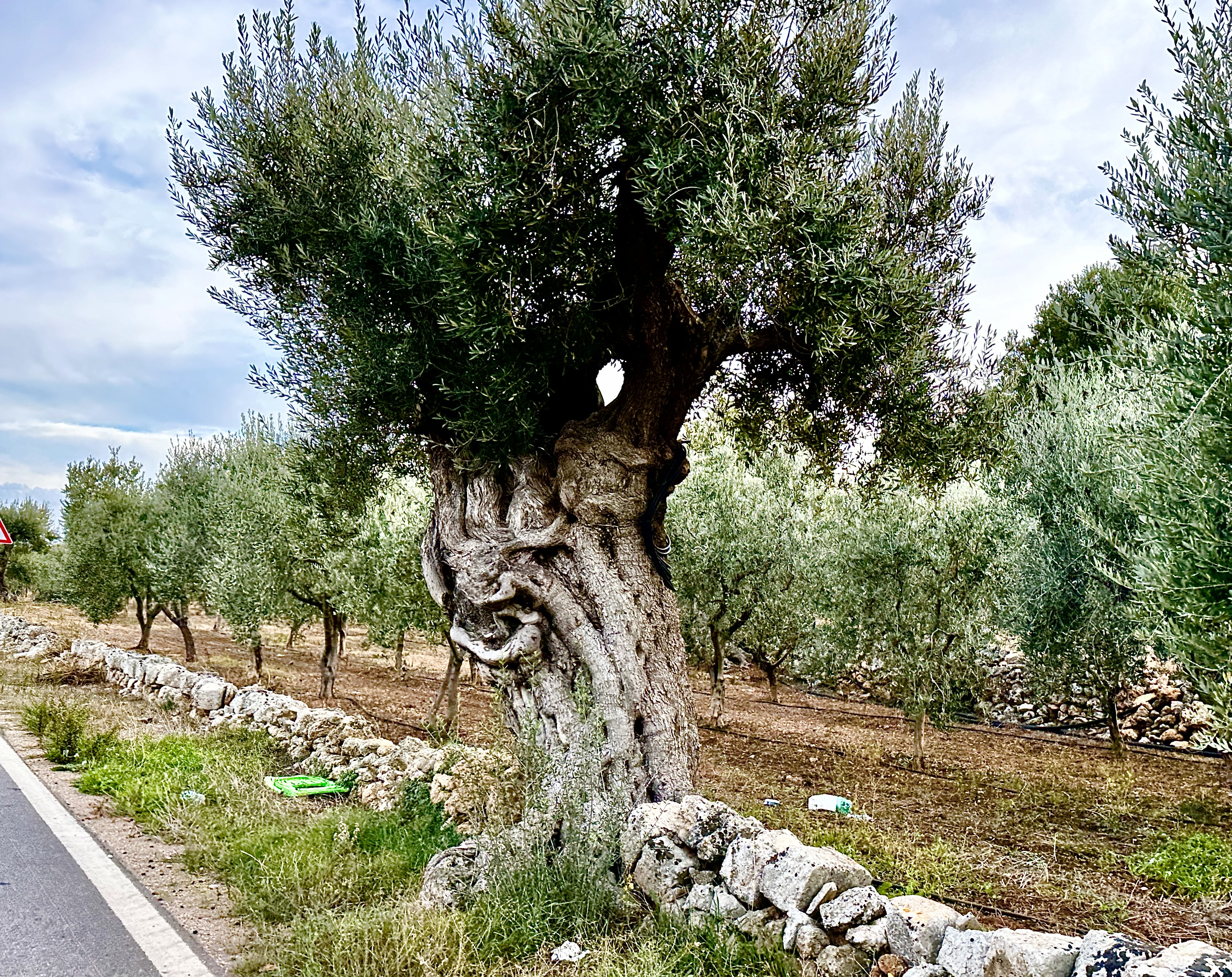
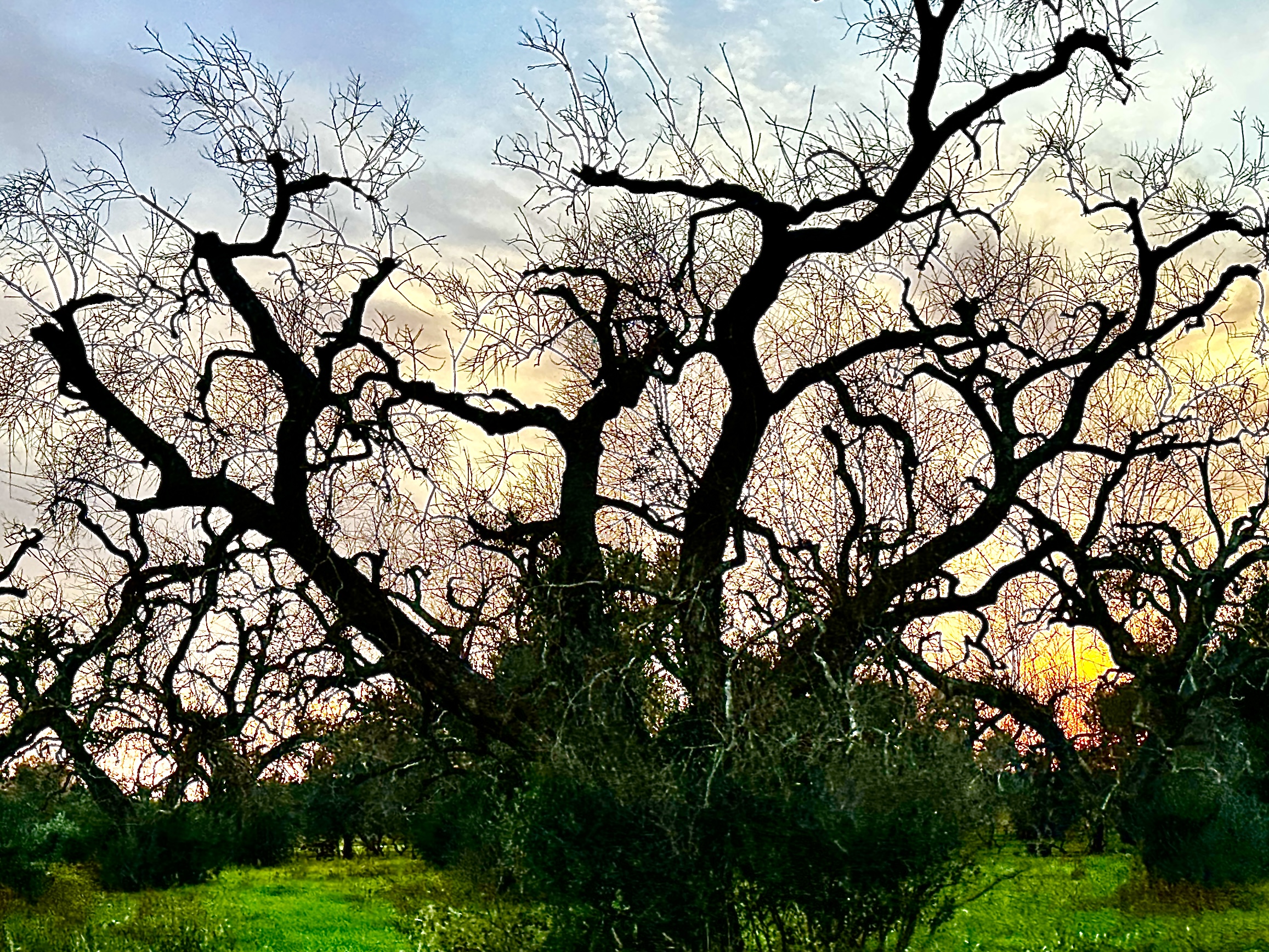
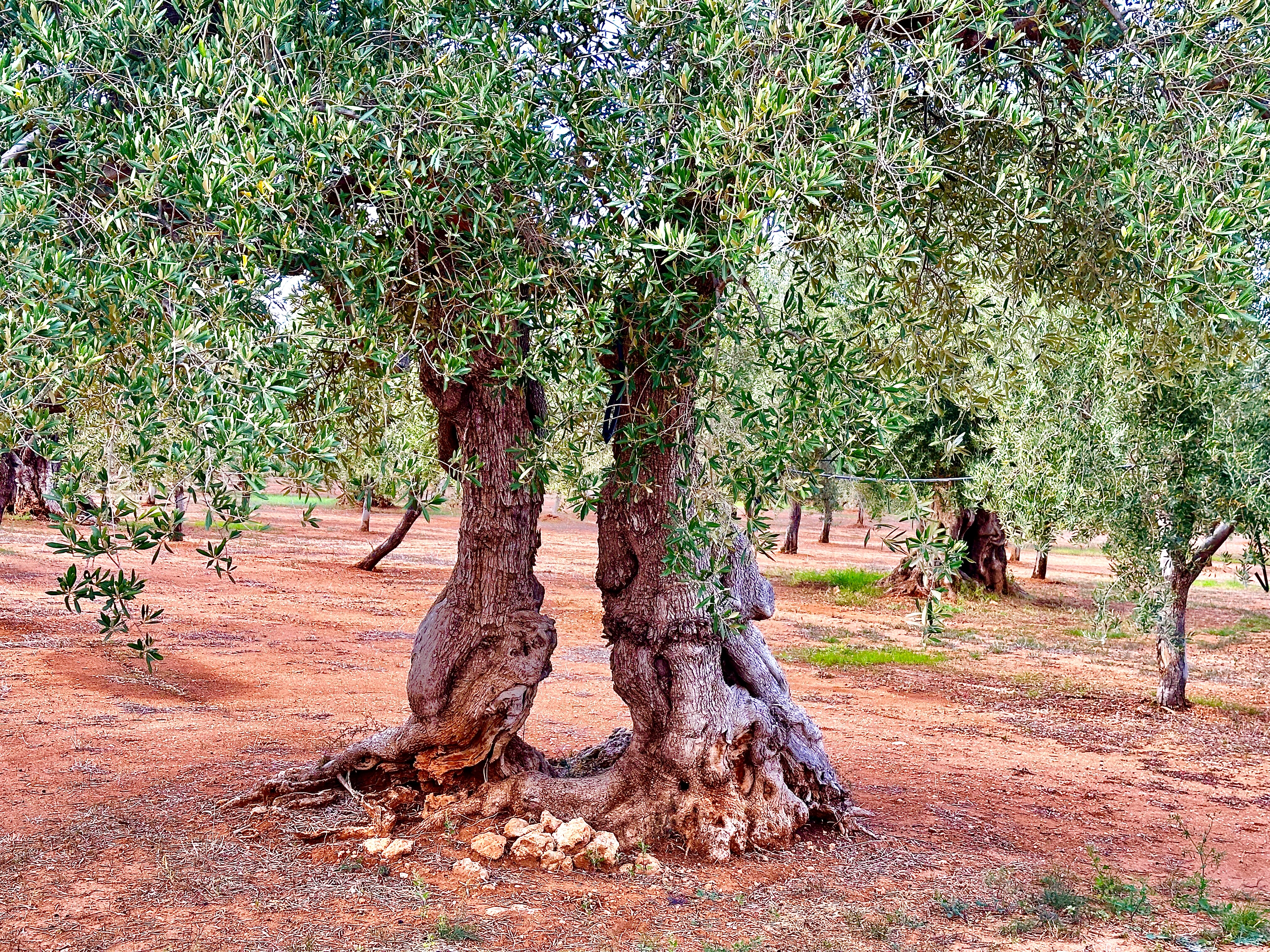
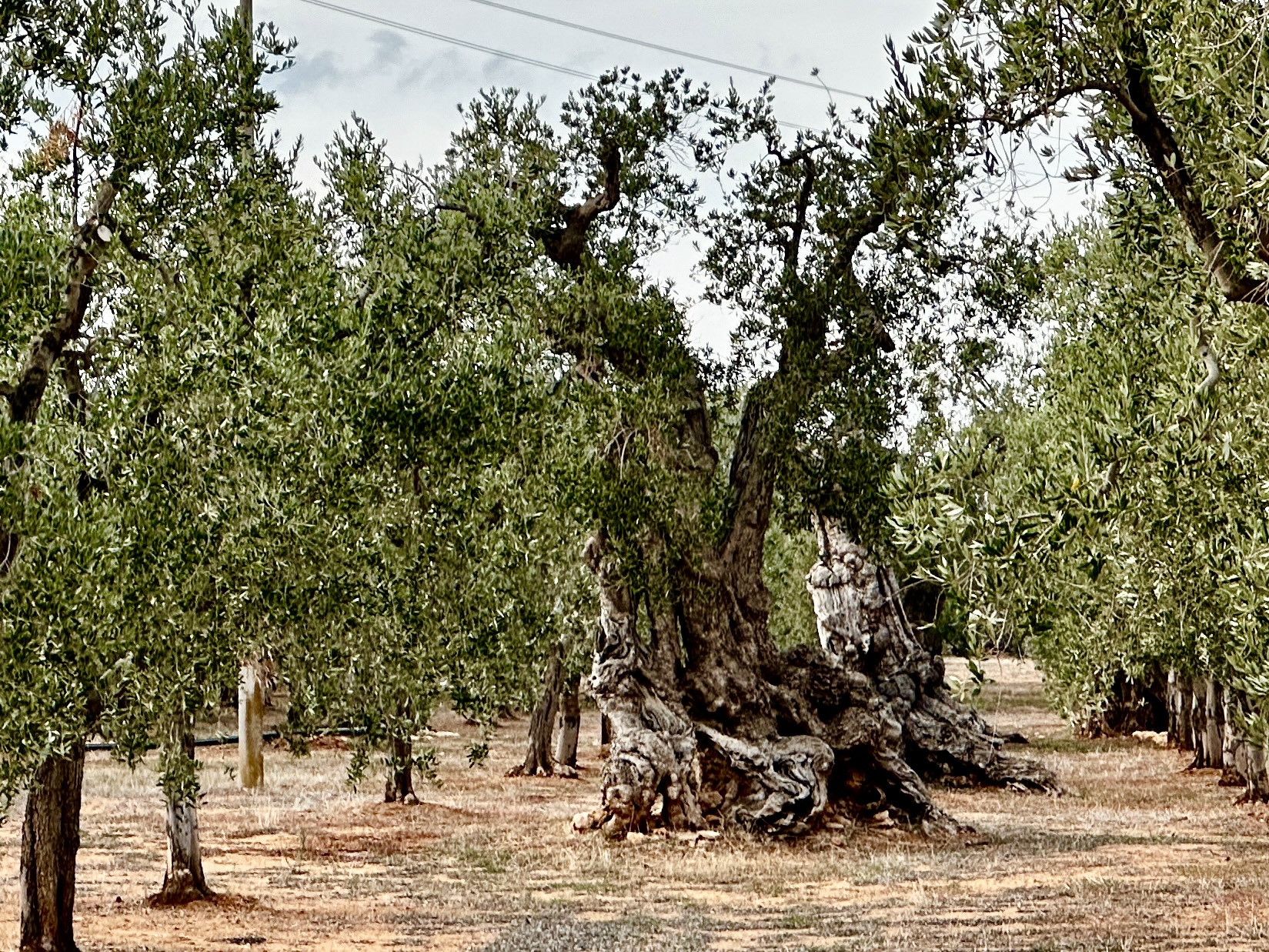
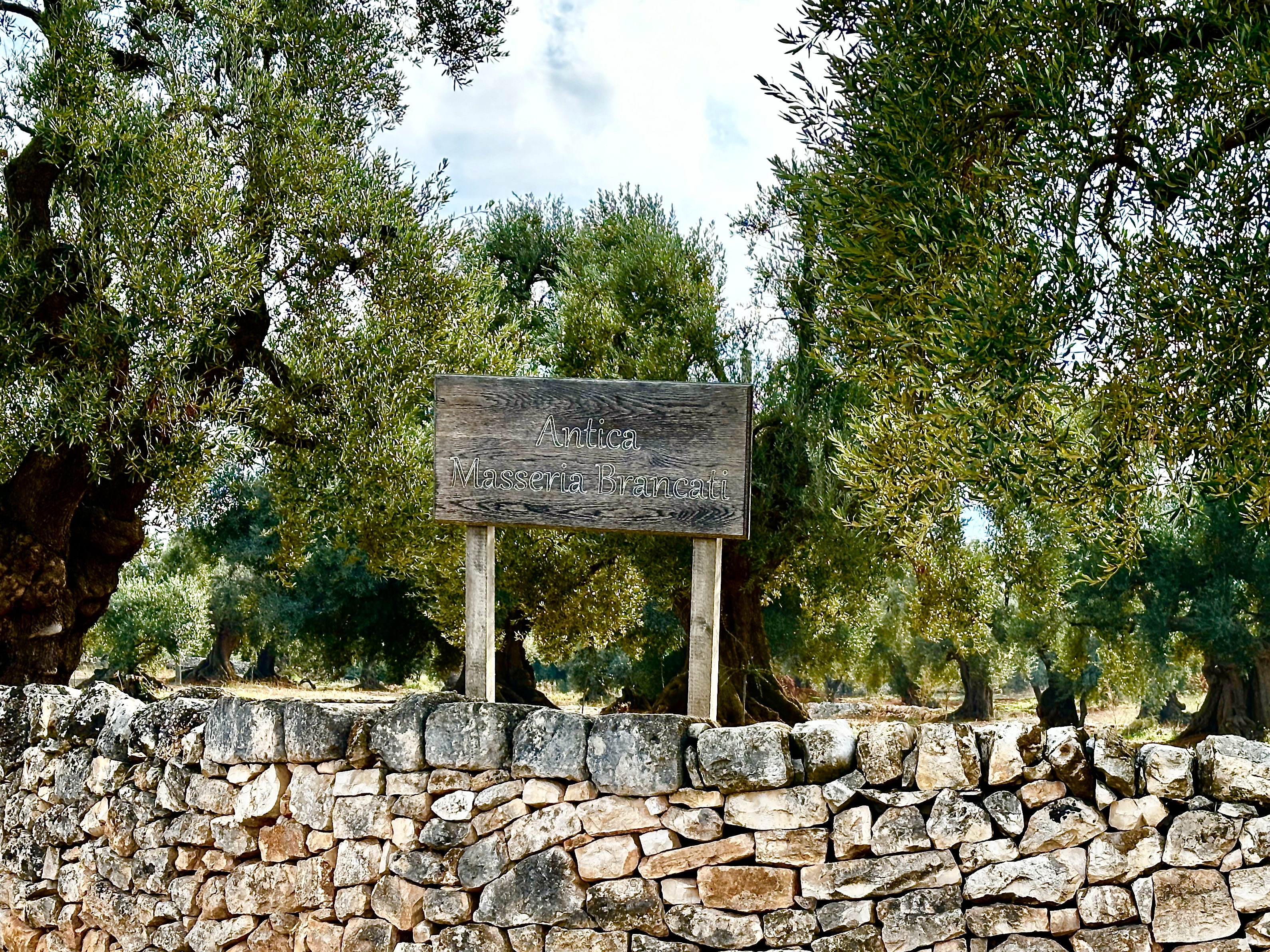
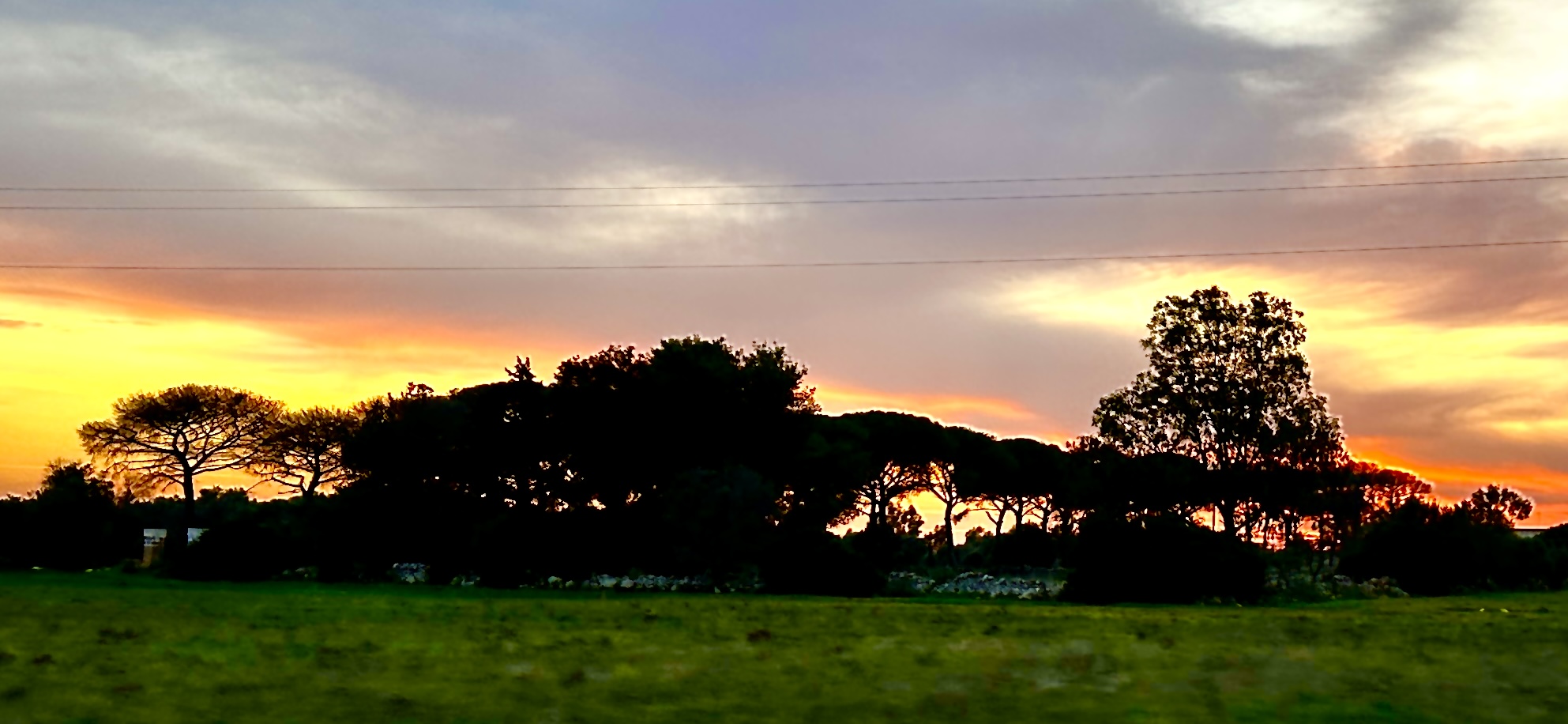
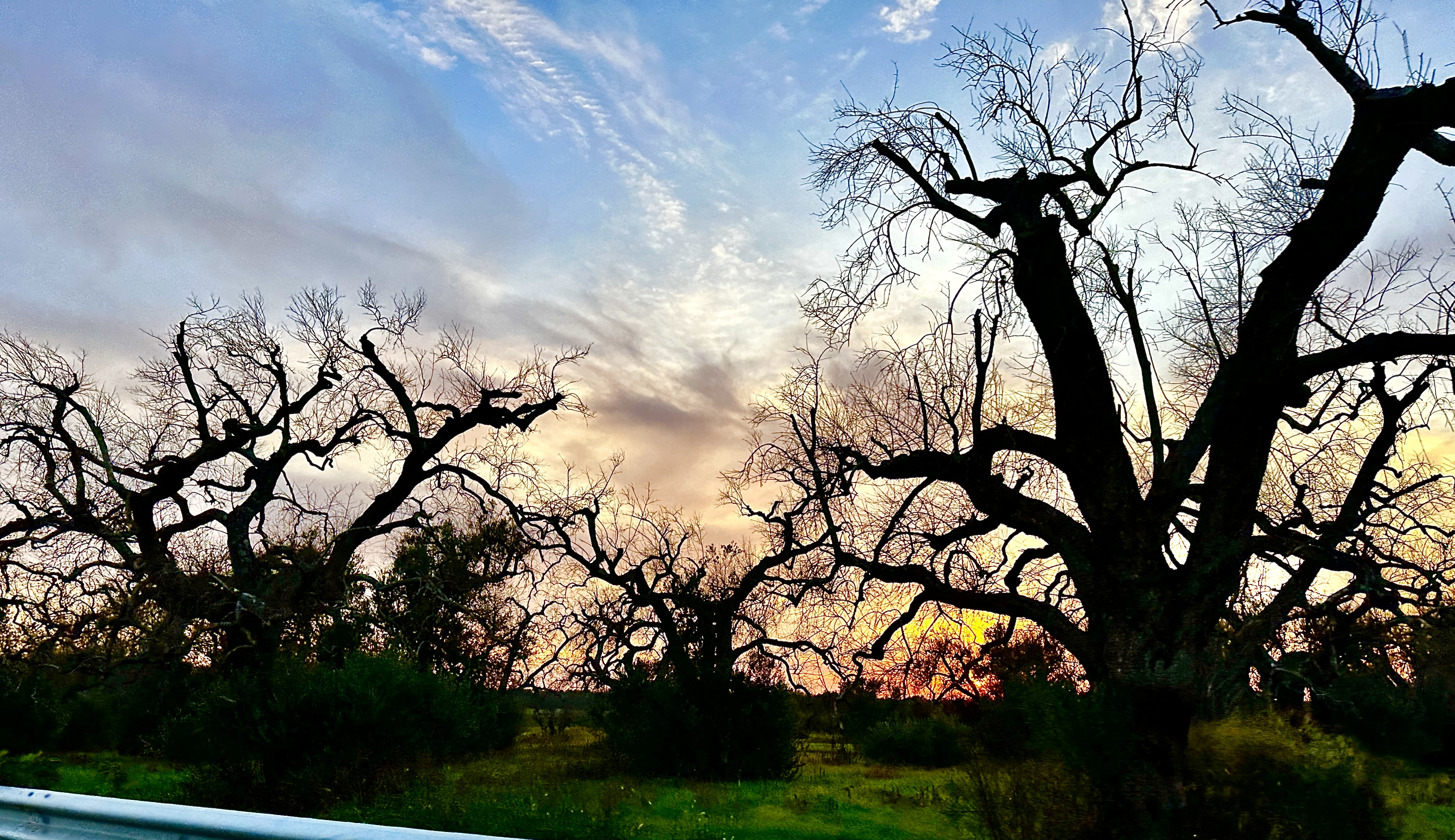
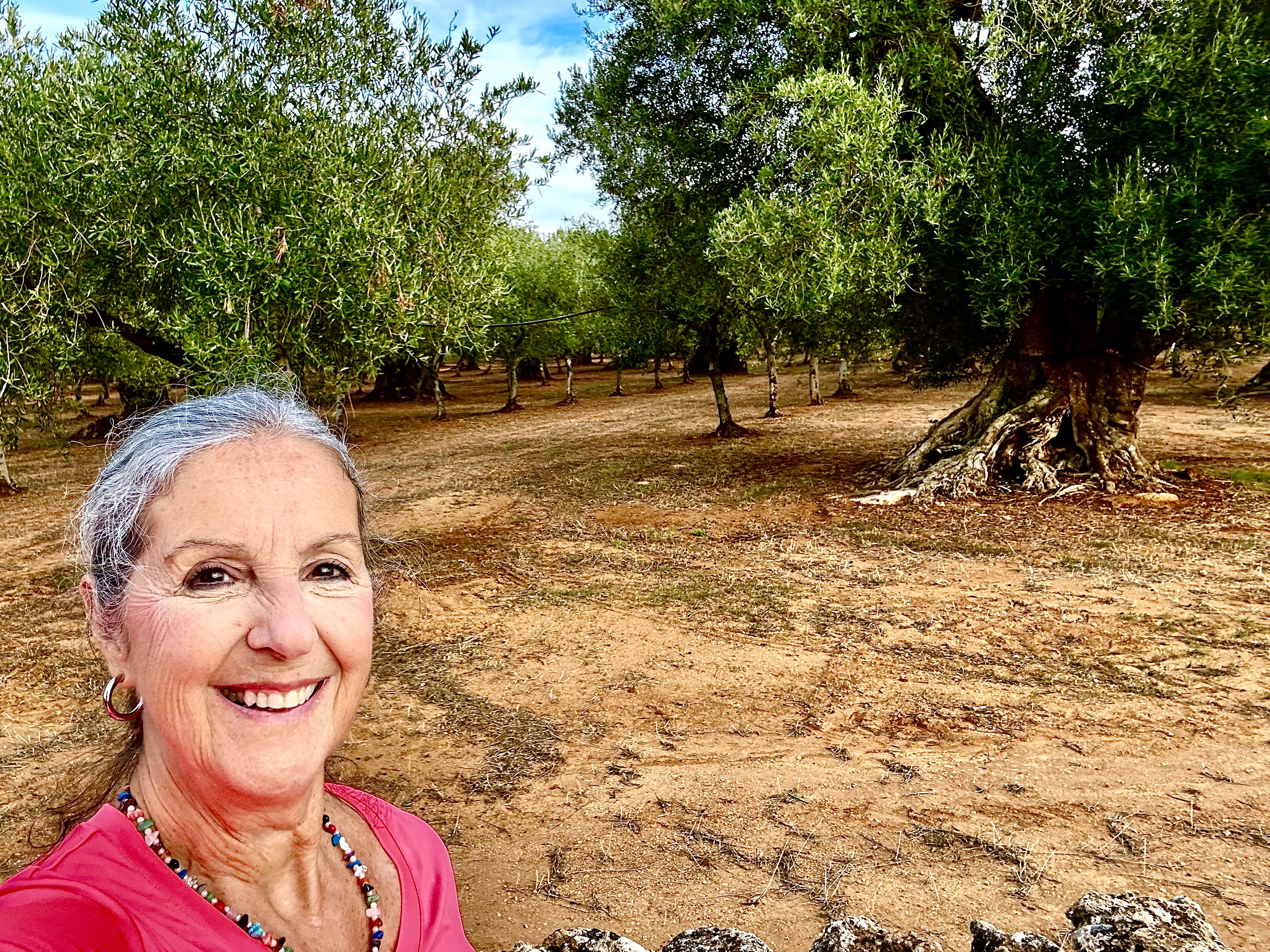
8 November 2024–My cousin’s (Alfredo Carzoli) birthday and Olive Trees: It was laundry day this morning, but it was a beautiful day, so we went for a bit of a road trip, but not—before wishing my cousin Alfredo Carzoli a very happy birthday! We elected to look for the Grande Vecchio, a 3,000-year-old olive tree in Puglia. At that age, he would be among the oldest, if not the oldest, olive tree nearby. Imagine: 3,000 years ago! That was before Jesus Christ was born! Who planted this tree? What was the everyday life of this person like? What did everything in this region look like then? What did this person look like? And…this tree still lives and produces olives! We knew that the greatest number of ancient olive trees in Puglia would be found in the Piana degli Ulivi. They would not be all on one farm or meadow. Rather, they would be interspersed among various messarias (farms). The Piana degli Ulivi is a chunk of land in Puglia that includes, among several other places, Ostuni and Fasano. The Grande Vecchio tree would be located closer to Ostuni. Upon arriving at that location, however, the proprietor announced that he was getting ready to close the property, that he needed to quickly have lunch and then travel to a nearby town for business, and that his workers were leaving….. “Mi displace, ma oggi non e possibile”—I am sorry, but today it is not possible. Uggh! He did, however, permit me to walk about the property right by the gate and take some photos. He explained that such old trees are not just located on his Azienda and that all of these large trees iin this area were very old, i..e., ancient. By old, he meant 1000, 2000,… years old! He explained that the large girth suggested that the tree was quite old but that its exact age would only be determined through careful analysis. These trees on his property had not been analyzed for precise ages, The tree trunks were huge, and this proprietor had quite a large number of these old, old trees that he estimated to be about 1,000-2,000 years old. The trunks were twisted and convoluted, sometimes creating caverns and human-or-animal-looking shapes. We traveled then to Fasano, to another large messaria. The trees there were a mix of younger trees and the very, very old. He still had quite a few of these ancient trees but there did not seem to be as large of a concentration of them on his azienda; rather, they were interspersed among younger trees of various ages. I found these ancient trees fascinating, and I was delighted to think that for once, I was not the oldest living organism in my surroundings! But…not all olive trees, even ancient trees, in this Piana degli Ulivi are so lucky to be alive and producing olives. Many olive trees that we passed on our way back to Porto Cesareo were chopped, dead, stumps, and no longer producing, obviously. It appears that around 2013 a bacterium called Xylellum Fastidiosus, and as a result, many of these majestic trees were destroyed. Given that Puglia produced most of the olive oil for the country, such destruction must have been a huge blow. We saw other things today, too, such as the White City of Ostuni (we had seen it when we were based in Alberobello), some trulli as common farm shelters of some kind, and a beautiful sunset as we approached Alberobello. We made it just in time to drive to my cousin, Paola Carzoli’s, house for a quick coffee and in order to meet her husband, Damiano. He had been ill when we visited earlier this week, but it was a pleasure to meet with him today. Finally, we closed the day with dinner at Da Antimo Restaurant in Porto Cesareo. John had the same thing he had several evenings ago there for dinner (the veal steak, but this time, with mushroom gravy), and I had a delicious serving of eggplant Parmesan (interesting, there was no offer to serve Parmesan should I wish to sprinkle some on top of the eggplant Parmesan. In the Emilia-Romagna region, such grated Parmesan cheese would be everywhere.





 Our Travels