
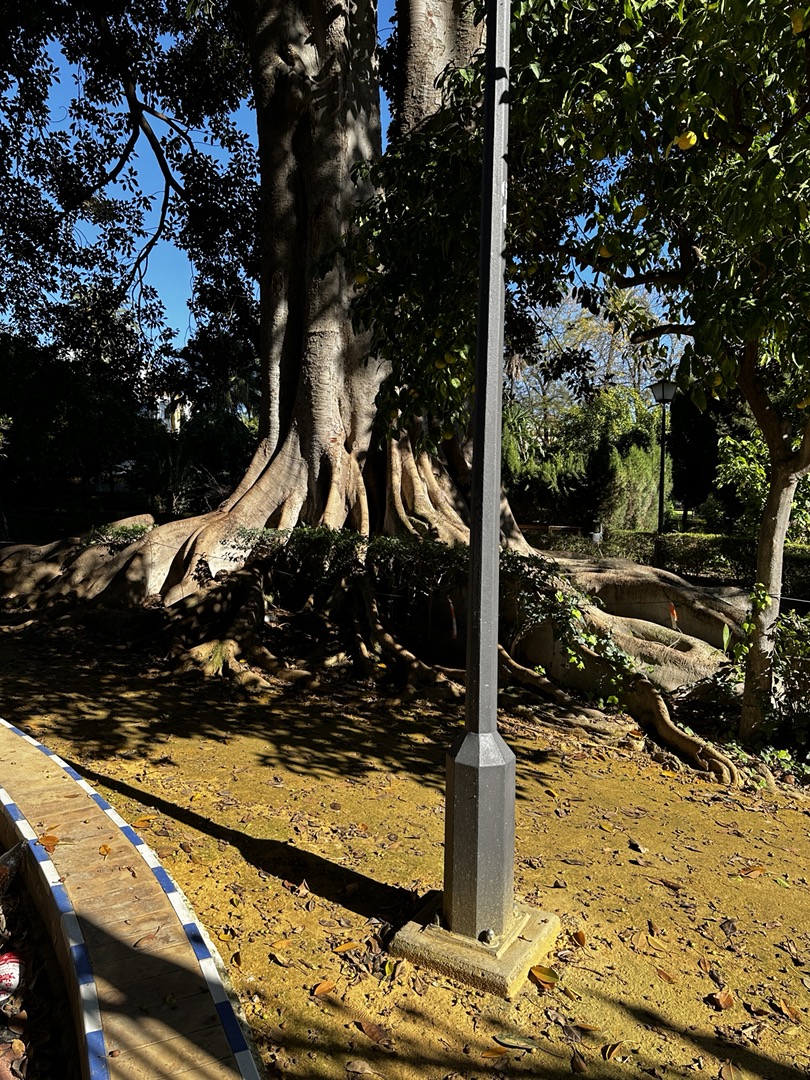
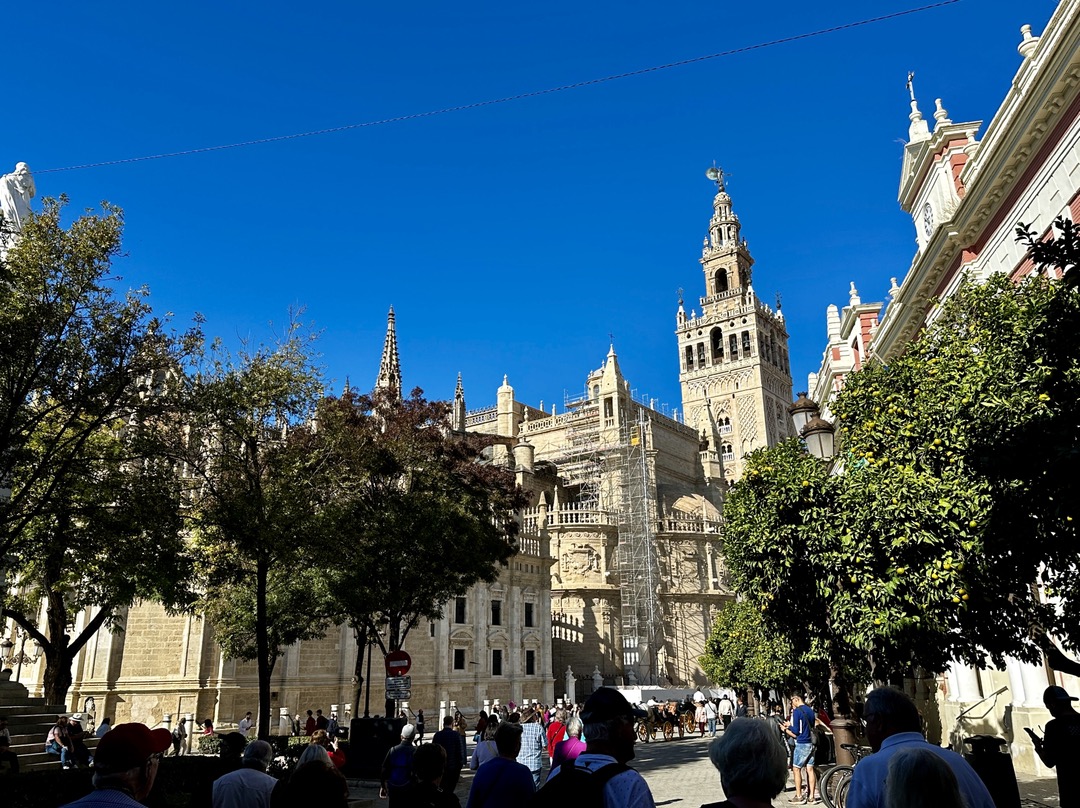
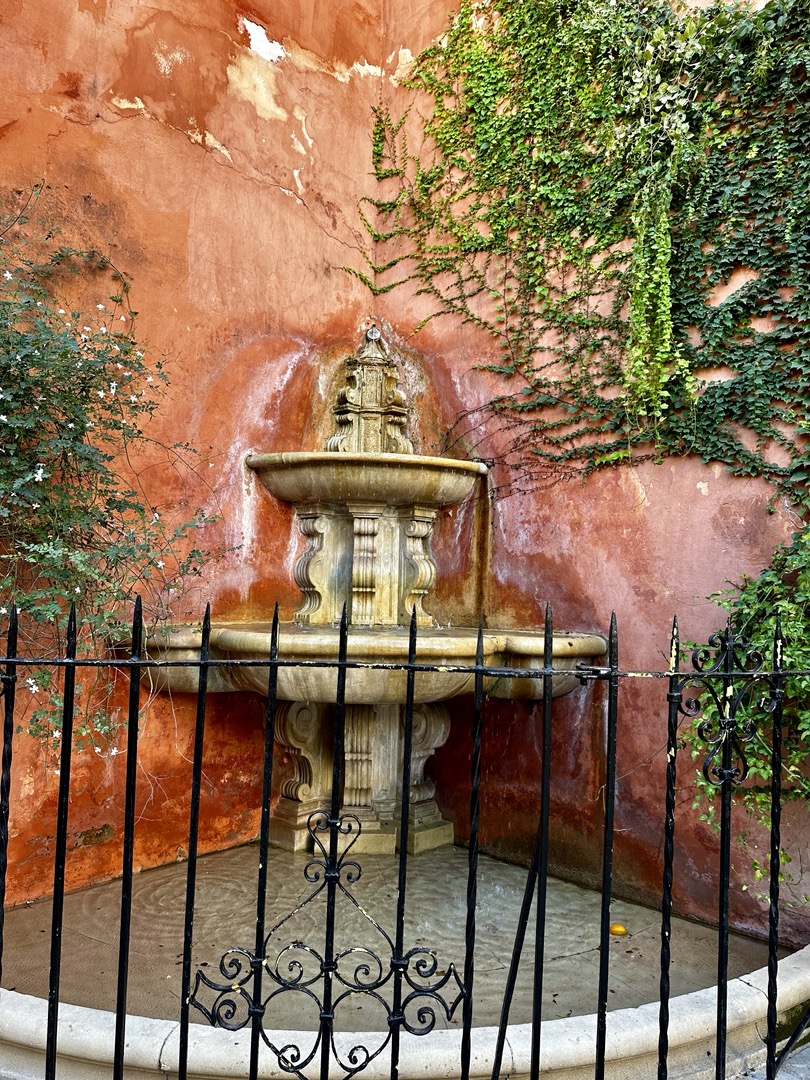
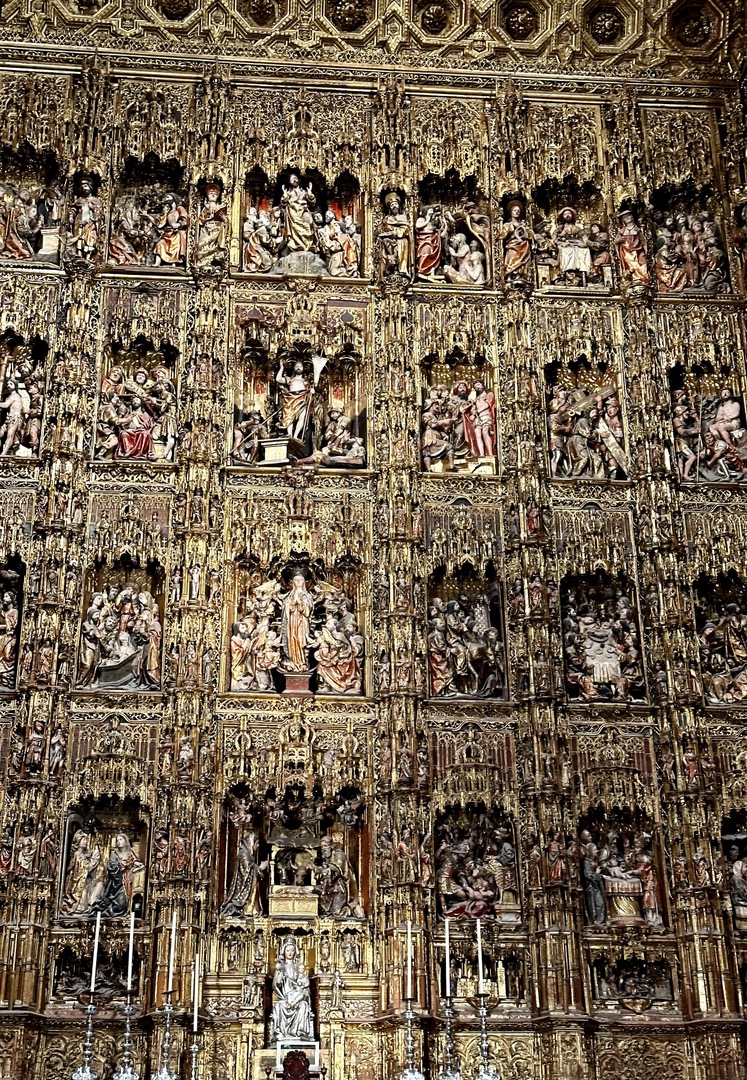
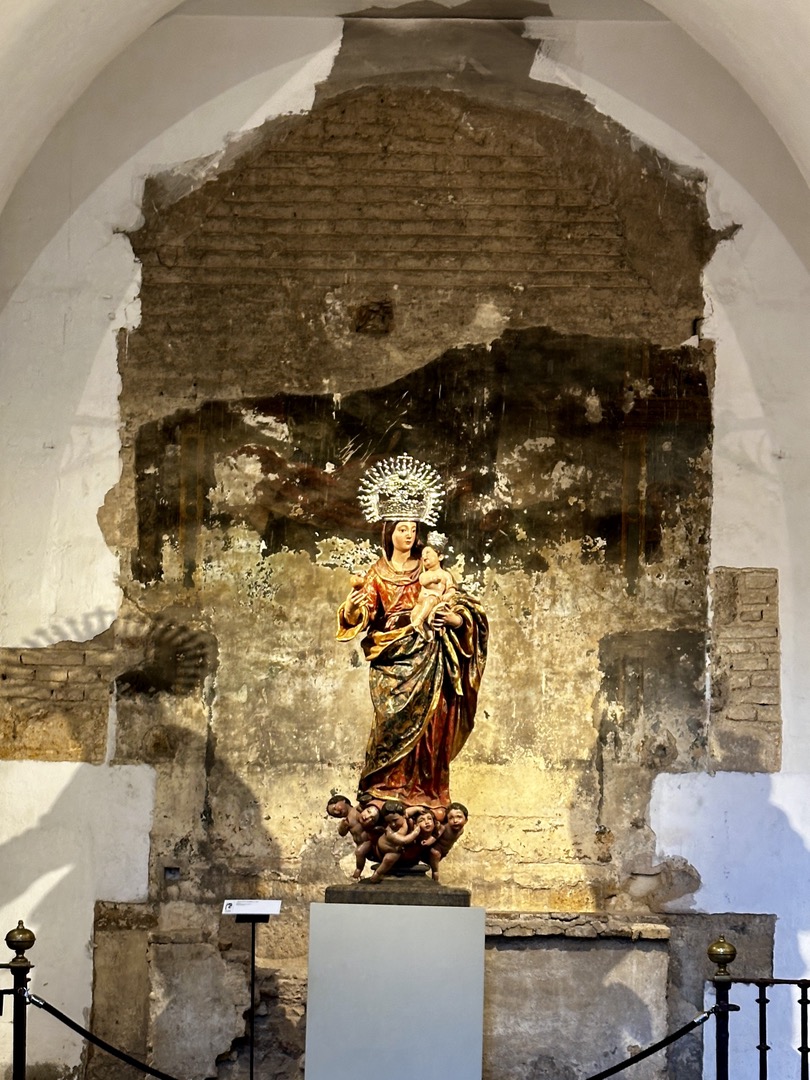
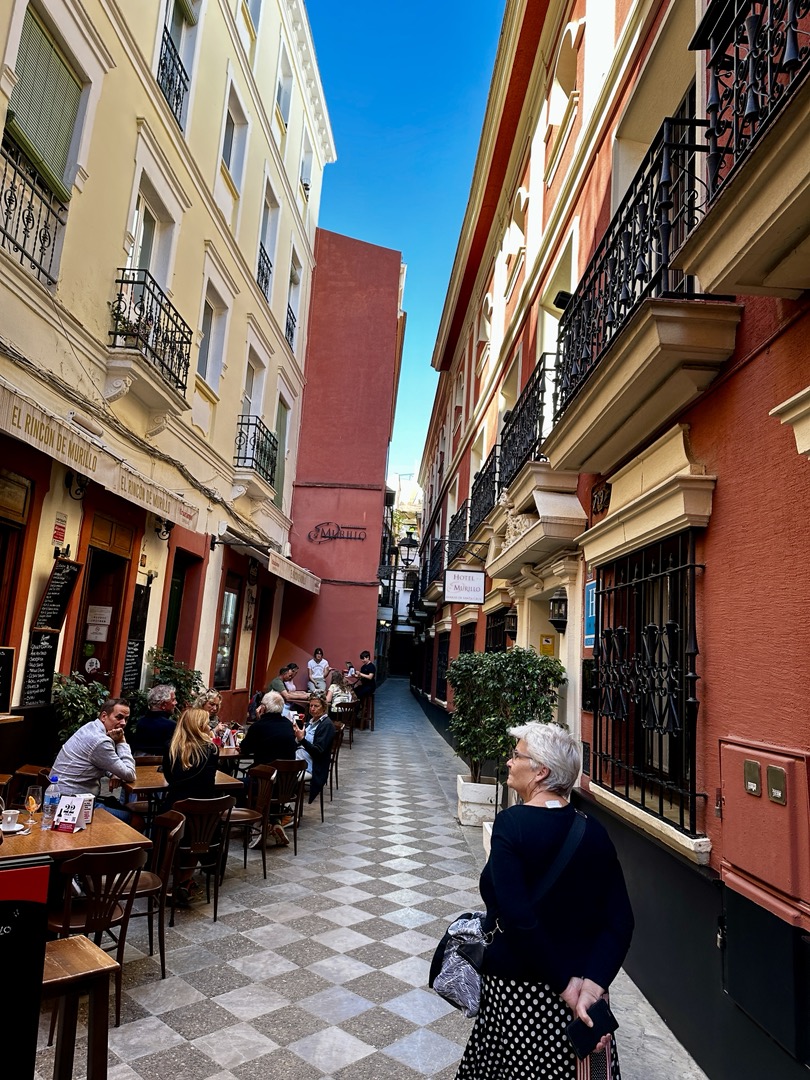
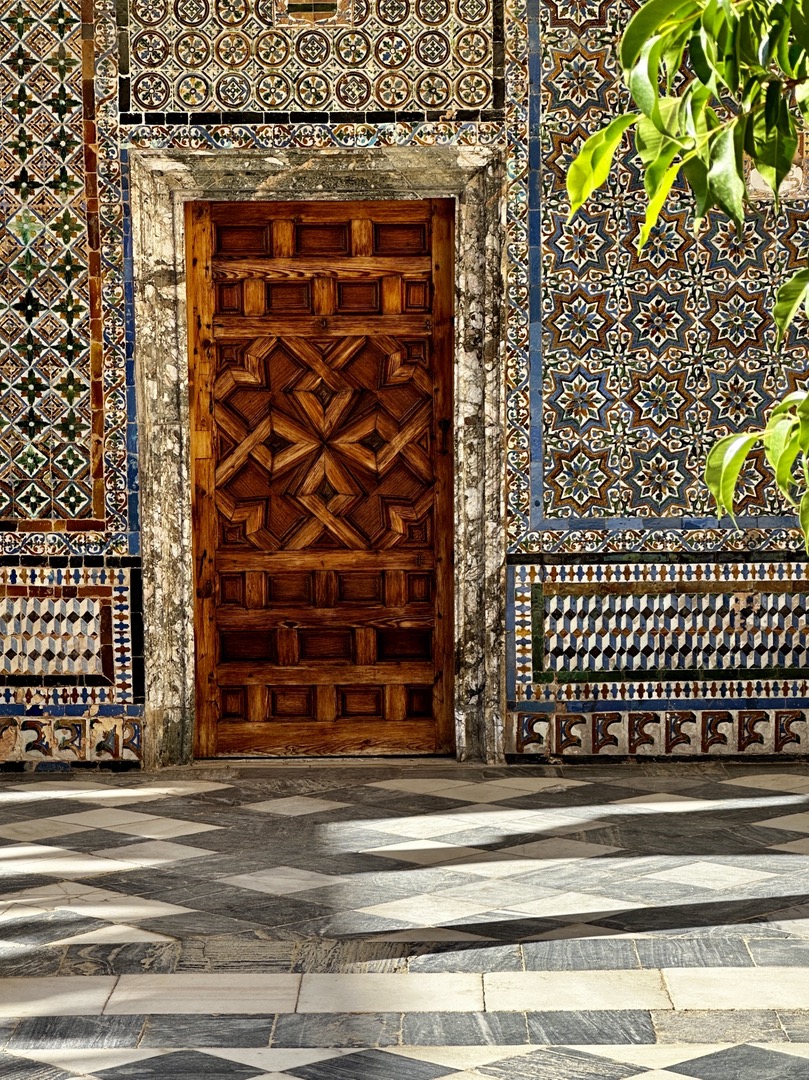
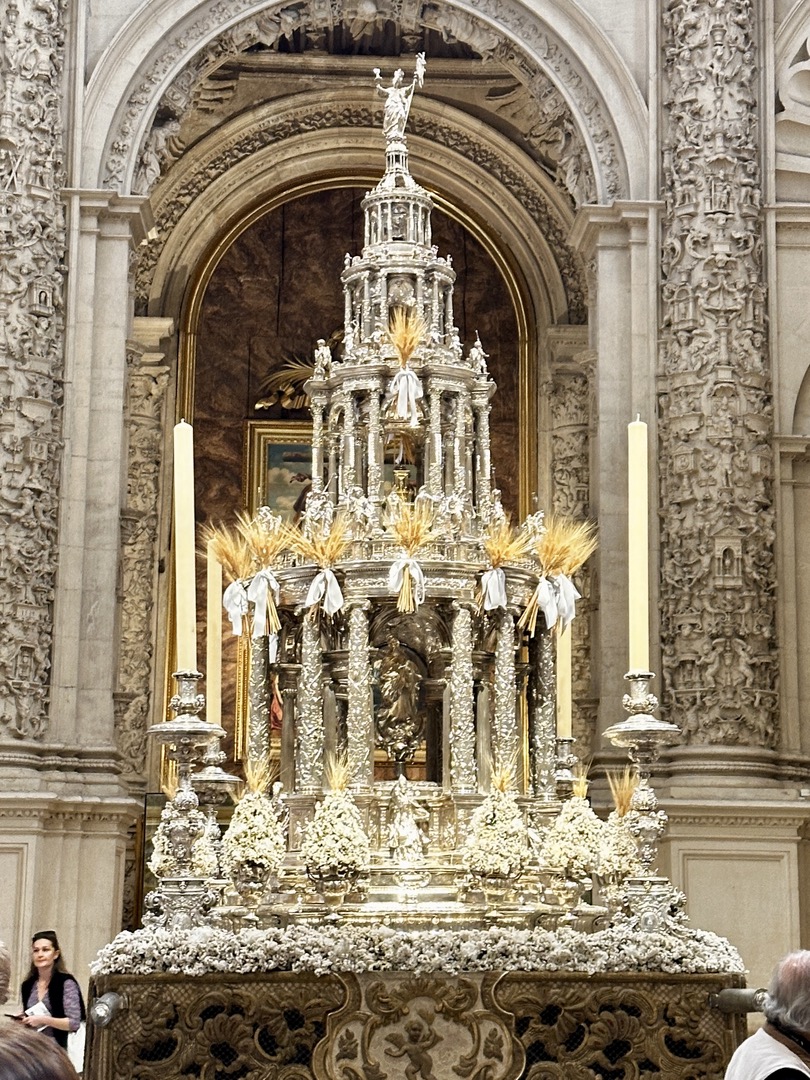
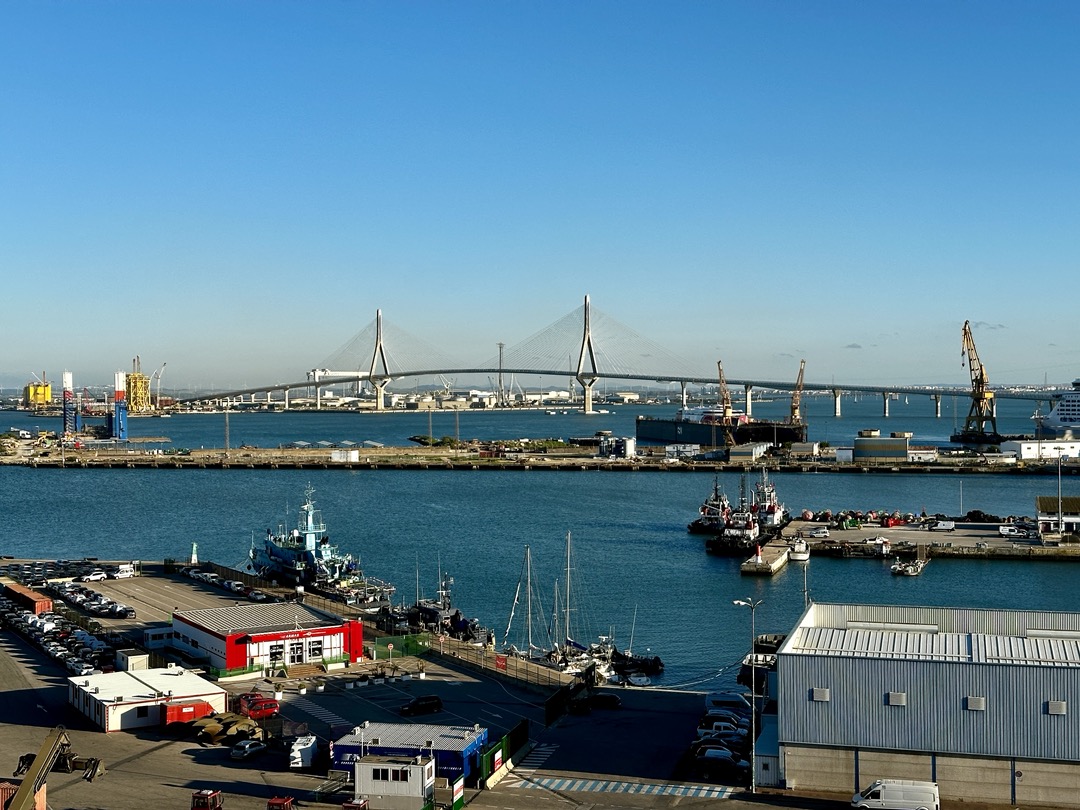
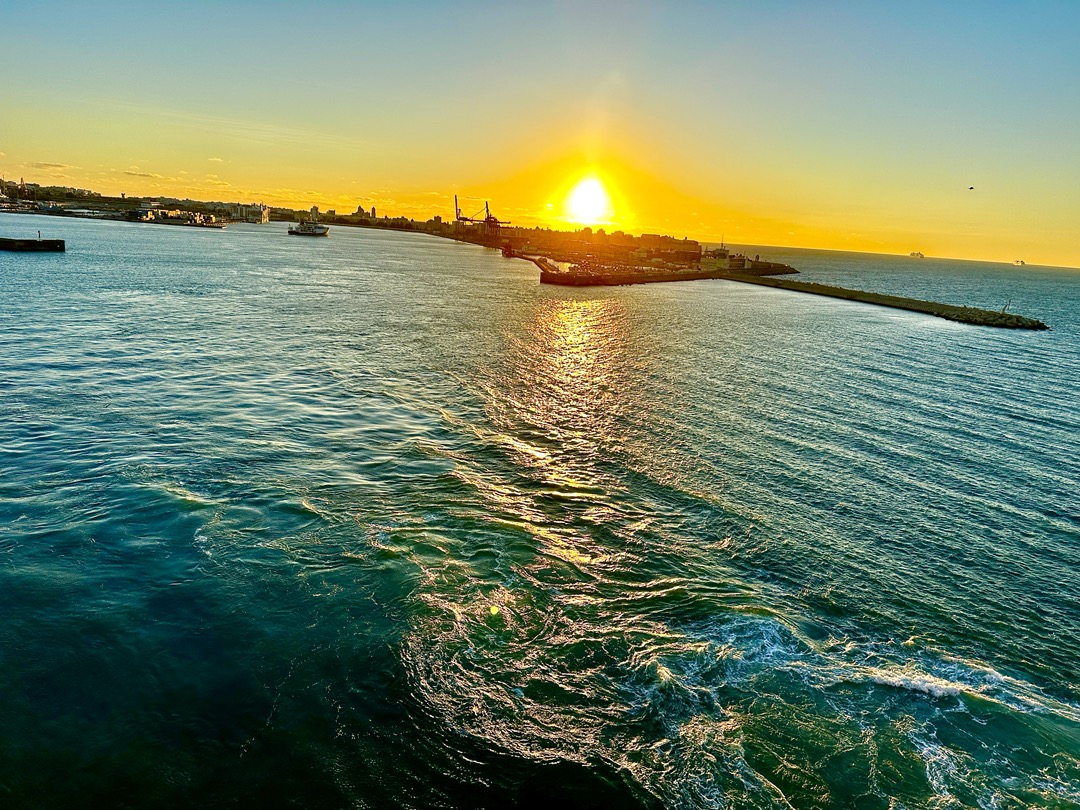
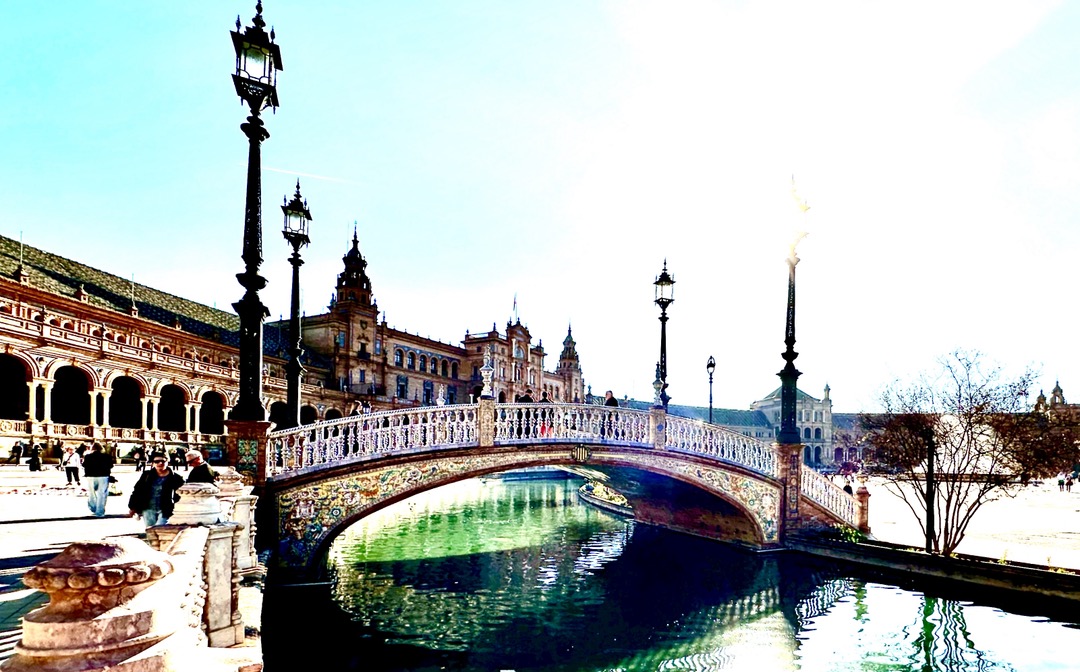
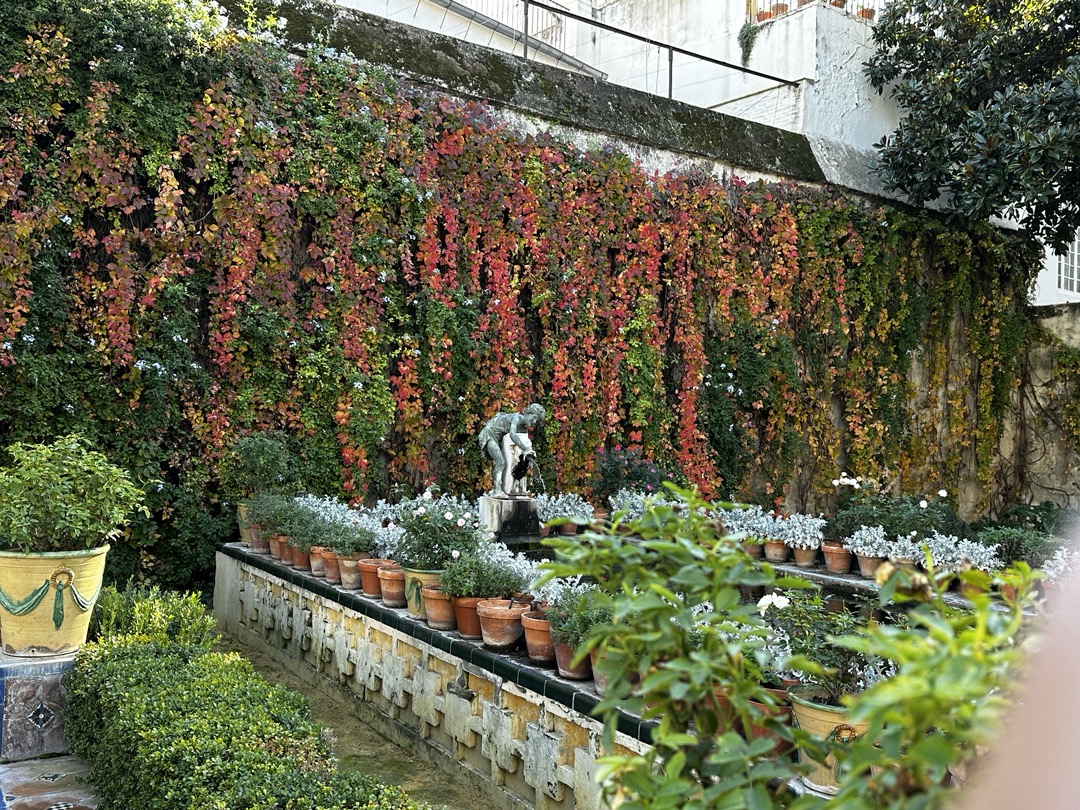
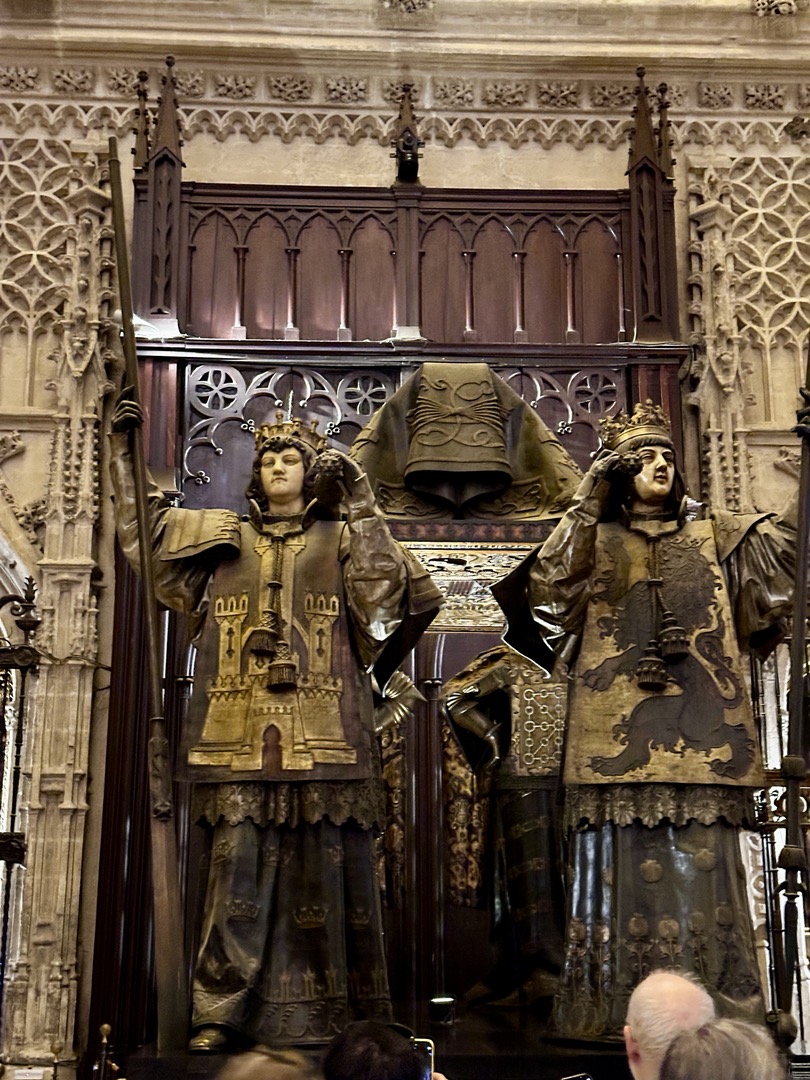
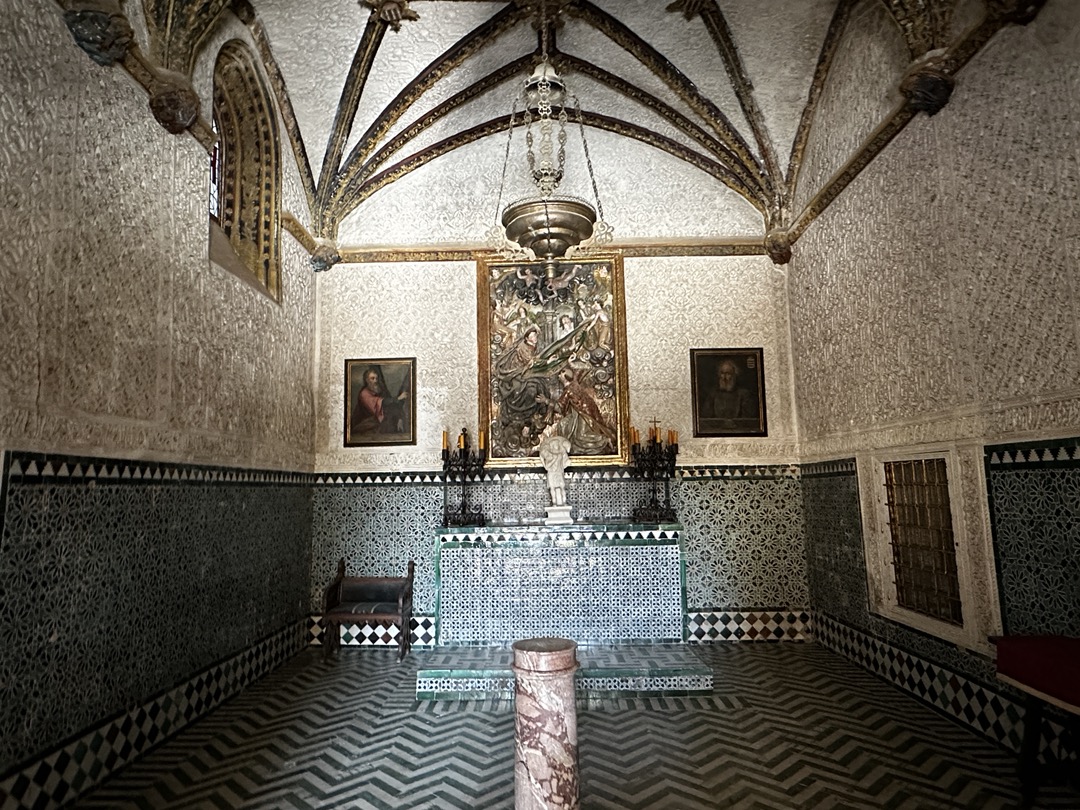
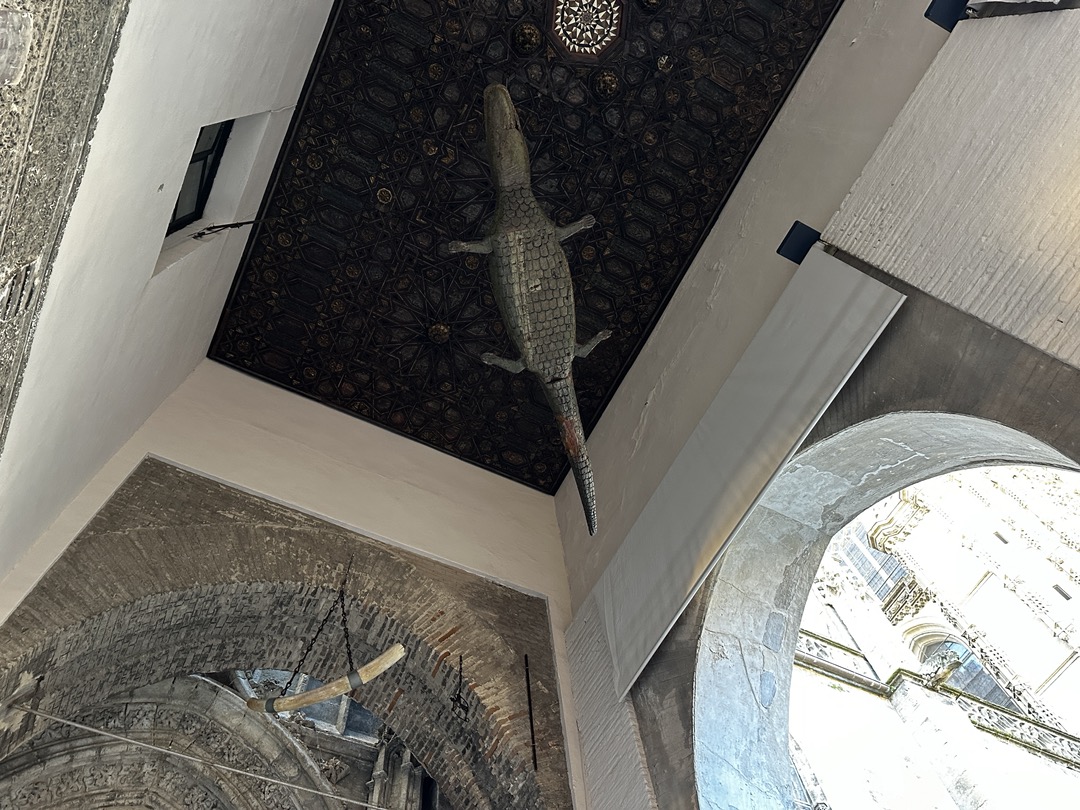
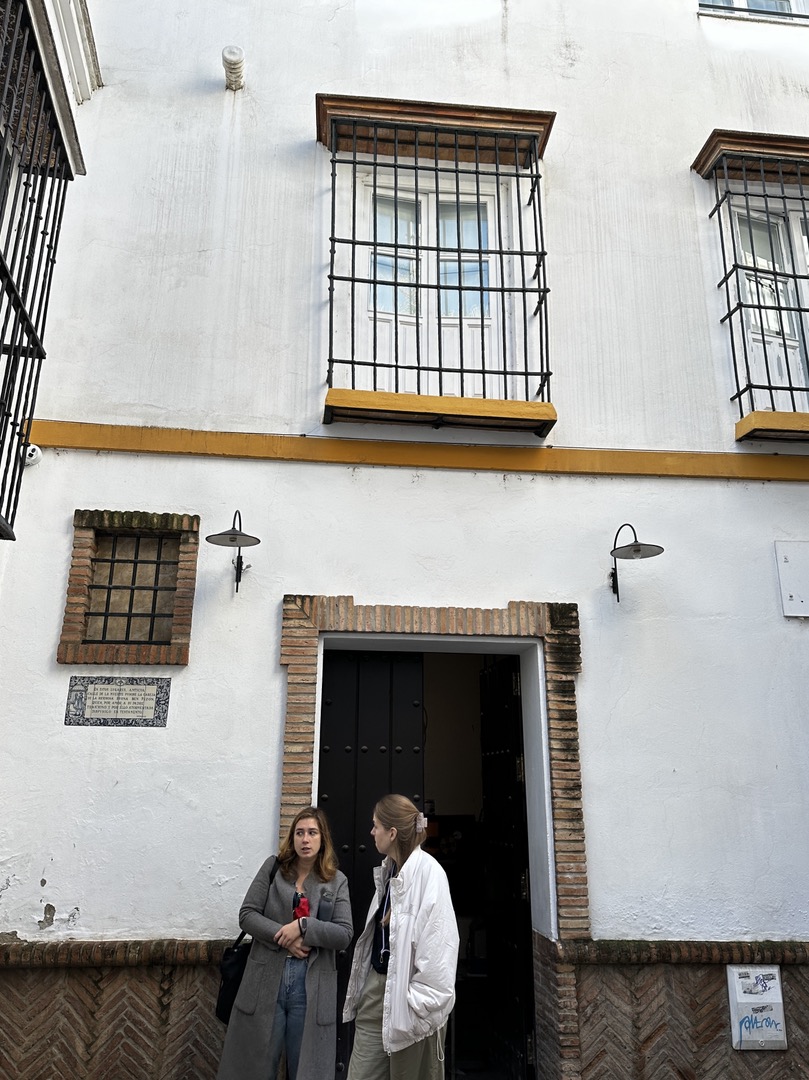
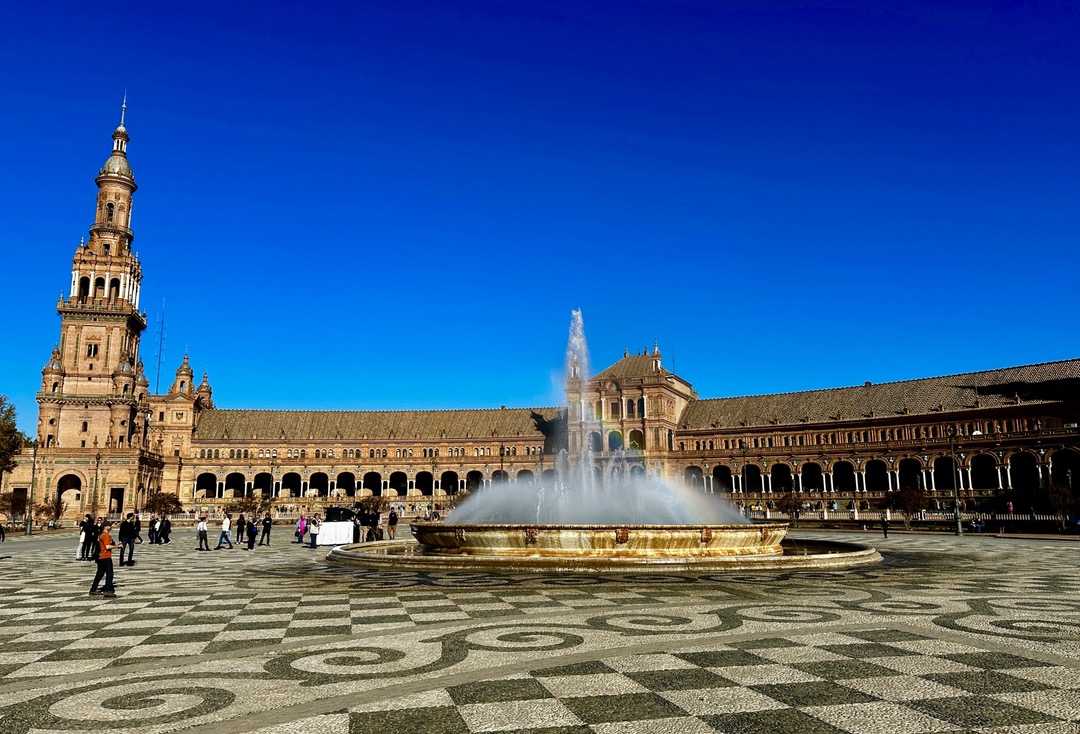
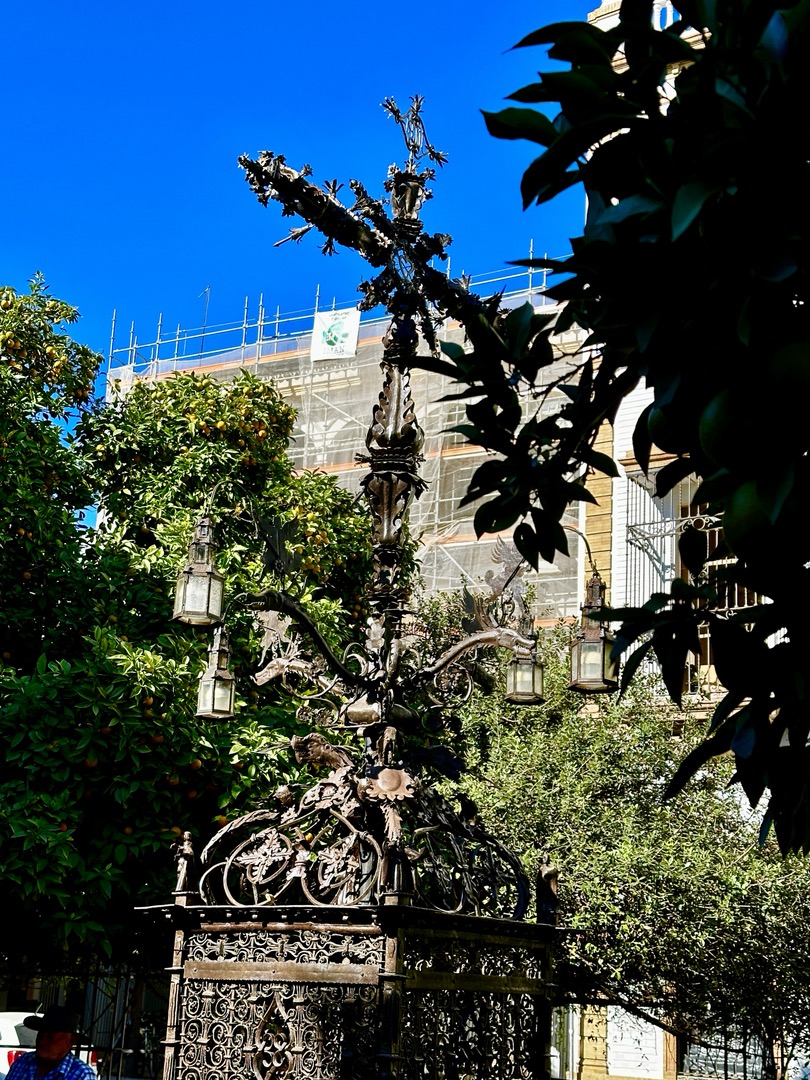
20 November 2024–Cadiz, Spain: We pulled into the port of Cadiz, the oldest port in South Spain. Cadiz is an island, a small City in Andalusia, Spain. It is connected to the Magic Triangle of Spain via the Constitution Bridge. I chose to take the tour from Cadiz to Seville, Sevilla, Andalusia, Spain. John chose to stay onboard and read in the sun, or otherwise relax. The weather was gorgeous again, sunny and comfortably warm—about low 70s F. Herein, I will share a little bit about what our tour guide explained to us. Cadiz is a city on the Coast of Light, where it is never too warm, and there is no winter there. There is an average of 300 days per year of sunlight. It has sandy beaches, tan/gold sand. It earned an award for the warmest, clearest waters. Water temps in November range between 72-77 F. Today, I saw what appeared to have been dried palm fronds/dried seaweed/straw-looking debris where the water meets the shore, so it was a little different from the manicured beaches one sometimes sees in Florida, for example. People were on the beach, however, and someone was even in the water, clearly relishing this beautiful weather/spot. Seville is one of the largest cities in Spain. It has no beaches, and it tends to get very hot in the summer sometimes. Today, it was warm enough for us to sweat as we hustled/walked through the center of town, but it was sunny and comfortably warm with no need of a jacket or sweater. On the way to Seville, about 1 1/2-hour drive from Cadiz, we drove past beaches along the coast of the Magic Triangle. The Magic Triangle is the area between Cadiz and Seville. La Frontera is one of the sections of that region. We learned that the Magic Triangle boasts a long stretch of beautiful golden-sand fine-grain beaches that are used by locals and tourists year-round. Tuna fishing is a big event around May of every year. Only large tunas, minimum of 132 lbs., are caught through a “sustainable” method called almadrama, which means “least fight.” “Sort of like bullfighting but under water.” Another delicacy that come from the waters in this area is sardines. They are skewered with palms and roasted on an open fire. The Magic Triangle produces cotton (on its rich dark soil), Palomino grapes (on its largely-limestone “white” soil) that produce sherry (cannot be called sherry unless it is grown/produced in La Frontera, cereals, and fruits. We saw a “typical town” along the road, with a church at a high point on a low hill and white buildings/structures all around the lower part of the hill. The white-washed villages are common in this area, as they are in Italy and Greece. As we approached Seville, we passed beautiful lush green parks, palaces, many of which have been turned into museums or hotels, beautiful palm trees, orange trees (these oranges are just decorative, however. No one collects them. The Locals prefer the delicious larger oranges that grow in this region), and a tree with HUGE dramatic roots above ground. We passed a bridge, currently under repair, built to commemorate the 500th year of the discovery of America (1492-1992). The discovery of America opened up avenues for trade. Seville is the center for trade with America, and from this, Seville has become a wealthy city. The buildings in Seville are beautiful, colorful, quintessential “Spain.” We visited the Plaza de Espana through a brick portal. Little did we know what would await us on the other side. This is a HUGE open plaza, a stunning plaza, with a large fountain in the center, bridges decorated in colorful mosaics, lagoons, mosaic representations of key historical events for Spain, …. A feature of this tour was lunch at a local Spanish restaurant. We stopped at the Restaurant San Marcos. The main dish was delicious: chicken in a sweet sherry, raisin, and potato sauce. As a group, we walked some of the narrow streets in “monumental Seville,” an area where “No Locals live; there are only tourists.” By “narrow”, I mean that only two people can walk side-by-side at any given time in some of these streets. The streets are lined with hotels, shops, restaurants, and colorful buildings. The restaurants are multi-ethnic, judging by the names and the menus, reflecting the thriving international tourist industry in Seville, and the city’s historical ventures. Many of the gift shops sell beautiful, colorful, intricate, hand-crafted mosaic pieces. The process used in creating these mosaic pieces is called “arista.” Arabic and Jewish influences are prominent throughout. We walked through the Jewish quarter and learned about the Legend of Susana (a love story gone tragically wrong). We saw the symbol of Seville, Las Cruces (a large ornate, metal Crucifix) monument. This tour also included entry to the Catedrale de Seville, aka La Giralda by the locals, and officially Catedrale de Santa Maria. It is known as La Giralda after the spinning weather vane at the top of the Bell Tower “La Giralda” on its premises. This Cathedral is the third largest in the world: St. Peter, Rome; St. Paul, Brazil; and Holy Mary, Seville. In the entryway to the Cathedral, on the ceiling, is an alligator and a bull horn. Inside the Cathedral., one can find the Tomb of Christopher Columbus, although his body moved around a lot, depending on who conquered whom, and so on. Supposedly, this is where he currently lies. The main altar of this Cathedral is breathtaking! It is surrounding by an extremely intricate/elaborate wooden sculpted creation that must be seen to comprehend its splendor. But one immediately is drawn to huge silver sculptures/structures that are then carried in the famous neighborhood processions that take place during the Santa Semana (Holy Week) every year. Our final visit during our tour to Seville was to the Pilates House, which is a huge elaborate palace that is still visited by its owners every now and then. It is another beautiful structure that is decorated with intricate mosaic patterns, beautiful wooden doors, and a stunning outdoor garden featuring a cistern/aqueduct. Seville, to me, is Spain. It is how I have always envisioned Spain, the splendor of its buildings, their rich colors…. And yet, I recognize that this one day just provided a small glimpse into the culture and style of this beautiful place.


 Our Travels